
Liza J. Nicholas is the author of Becoming Western: Stories of Culture and Identity in the Cowboy State (Nebraska, 2008) and coeditor of Imagining the Big Open: Nature, Identity, and Play in the New West. Her new book Bloodlines: A Story of Horses, Family, and Obsession (Bison Books, 2026) was published in July.
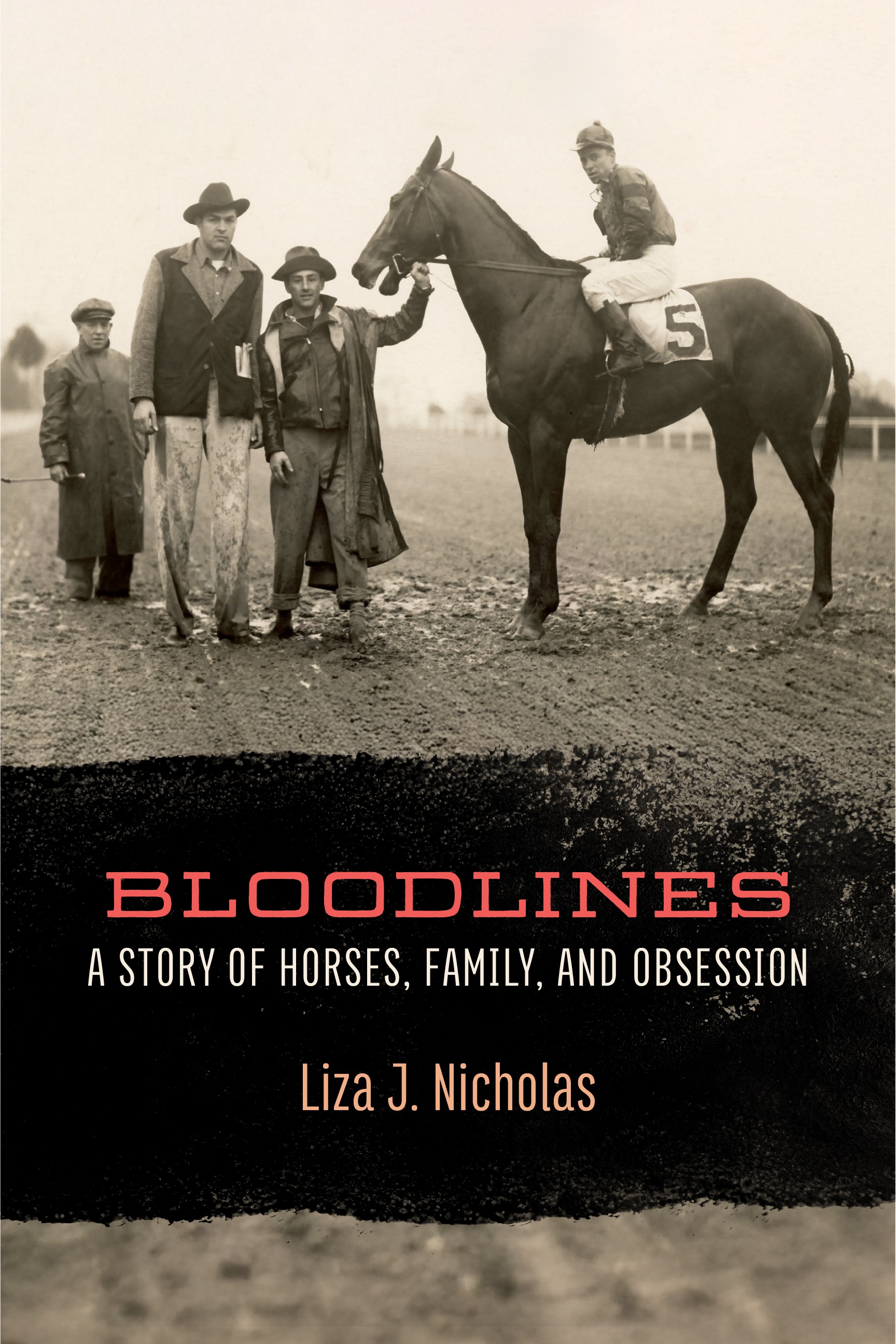
Bloodlines: A Story of Horses, Family, and Obsession is a love story—of a mother’s love for her husband and a father’s love for horses. Combining memoir and social history with a journey into the world of horses, Liza J. Nicholas reveals how a parent’s passions can determine the destiny of an entire family.
1
Sold
Verb: To exact a price for
I don’t remember packing up and leaving. I was only five. Somewhere though, I have a yellowed clipping reminding me that we did, an advertisement in the Billing’s Montana Gazette from October 1969: “Auction Farm Equipment Dispersion, Barrels of Free Coffee and Donuts, Everything Sells! Farm Equipment, Vehicles, Shop Equipment, Cooking and Household Equipment, Belgian Horses, Milk Cows. Castle Mountain Livestock, C.E. Nicholas, Owner.”
I don’t remember my father buying them all with the proceeds, the chestnuts and bays and grays—he loved the grays. They were my dad’s collection, handpicked, carefully analyzed, singularly chosen. When we got to the track at Santa Anita, there they all were, their divine heads popped out of their stalls, alert, and always in anticipation of something, these creatures that my father nearly worshiped and that largely dictated much of my childhood.
My earliest memories were of this lost place, of playing in the cold mountain creeks on warm summer days, hands sticky from drinking Hires Root Beer. I remember flagging or warning drivers to take heed of the cattle on the road, and getting out of the pickup with my mother to watch ants crawl along the pavement in her effort to distract a bored child while we waited for the hired men, led by my father, to move the cattle down the road to another pasture.
I remember the line of barn cats following the choreman as he carried pails of warm milk from the dairy barn to the cookhouse. I remember occasional meals there with the hired men. When my father could not find a good cook—he could not abide bad food—my mother and the foreman’s wife, Mary, would fill in. My mother was an excellent cook, well matched to my father’s robust and enthusiastic appetite. She would mix up bread dough in a giant, green Tupperware bowl, which, years later, became so well worn that it took on a kind of translucence. She would dump out the dough on the counter, knead it, and then shape it into perfectly formed loaves, which she would cover with a towel to encourage them to miraculously puff up. After the bread was baked, the tanned tops risen above the edges of the tin pans, she would turn them out and sometimes slice off the heel for me, slathered with the butter she had churned.
We didn’t often eat in the cookhouse with the hired men, but when we did, they would include Jim, Sam, and, in the summertime, Duckie (the irrigator), a big man named “Dutch,” a few others of whom I have only the faintest of memories. The mountain meadows were flood-irrigated in the spring in time to harvest the wild hay later in the summer. Irrigating the meadows was an art form and required a knowledge of when and where to pull up boards to let the water run through one ditch before diverting it into another so that all the thirsty pastures had a drink. In his spare time, Duckie fished in the many mountain flows that traversed the ranch. He was such a fine fisherman that before he went out, he would ask my mother what size trout she’d like. He delivered dozens of rainbow trout to my mother who would fry them up in a cast iron pan until nicely browned, the skins so crisp they would snap when you bit into them.
The ranch that my father was selling in the Castle Mountains of central Montana was not small. To his mind, there was little point in possessing either subpar, unimpressive horses or property. It was, instead, forty-five thousand deeded acres with thousands more of leased pasture, grand enough to hold my father for five years. The ranch was nestled in an elevated valley, surrounded by gentle and low-slung mountains, the signature vista of western Montana. When we first moved to the ranch, we lived in a brown log house, part of what constituted the ranch “headquarters,” along with the dairy and horse barn, cookhouse, bunkhouse, and machine Quonset hut, all of which my father, upon taking ownership, improved and rebuilt and painted red with white trim.
The brown house was not large, and my father’s rolltop desk, stuffed with the detritus concerning ranching, took up most of the entryway, which one of the hired men, Jim Ramsay or Sam Owen, would often step into, outfitted in Scotch hats, overshoes, and down vests—although Sam always simply wore, even in winter, a Levi jacket, a symbol of his toughness. They would shut out the frigid air with a whoosh and stamp their snow-covered boots on the entry rug, their cheeks bright and burnished pink.
Jim (whom my father would later name a horse after) was a local who had worked on the ranch near White Sulphur Springs long before we owned it and knew its meadows, pastures, and mountains intimately. Sam was from Wisconsin and had worked for my father since my parents were first married. He was a righteous man, the son of a Baptist minister, somberly and intensely devout in his Old Testament beliefs and dedicated to my father. It was an unnatural devotion, as my father was libertine and a heathen. This mismatch would eventually and inevitably destroy the relationship. Sam favored a crewcut, undercut high-heeled cowboy boots, and, in the summer, patterned snap shirts with the sleeves cut off. If the weather was particularly bad, my mother would often prompt Sam to complain, knowing that he never would. No matter how bone-chilling the day, he would always resolutely reply that the temperature, even if subzero, was “just right.” My father always found work for Sam, even when he wasn’t ranching; he was not a man you let go of. And when and if my father did find another ranch, after he had retreated from racetrack life, he would once again search out such men. He paid them well and provided them with good housing and fine horses to ride, thus earning their loyalty and respect. These men, whom my father relied on and trusted, shaped my first ideas of competency. If he asked them to do something, they accomplished it, with no excuses and little doubt. This is what he expected of them.

