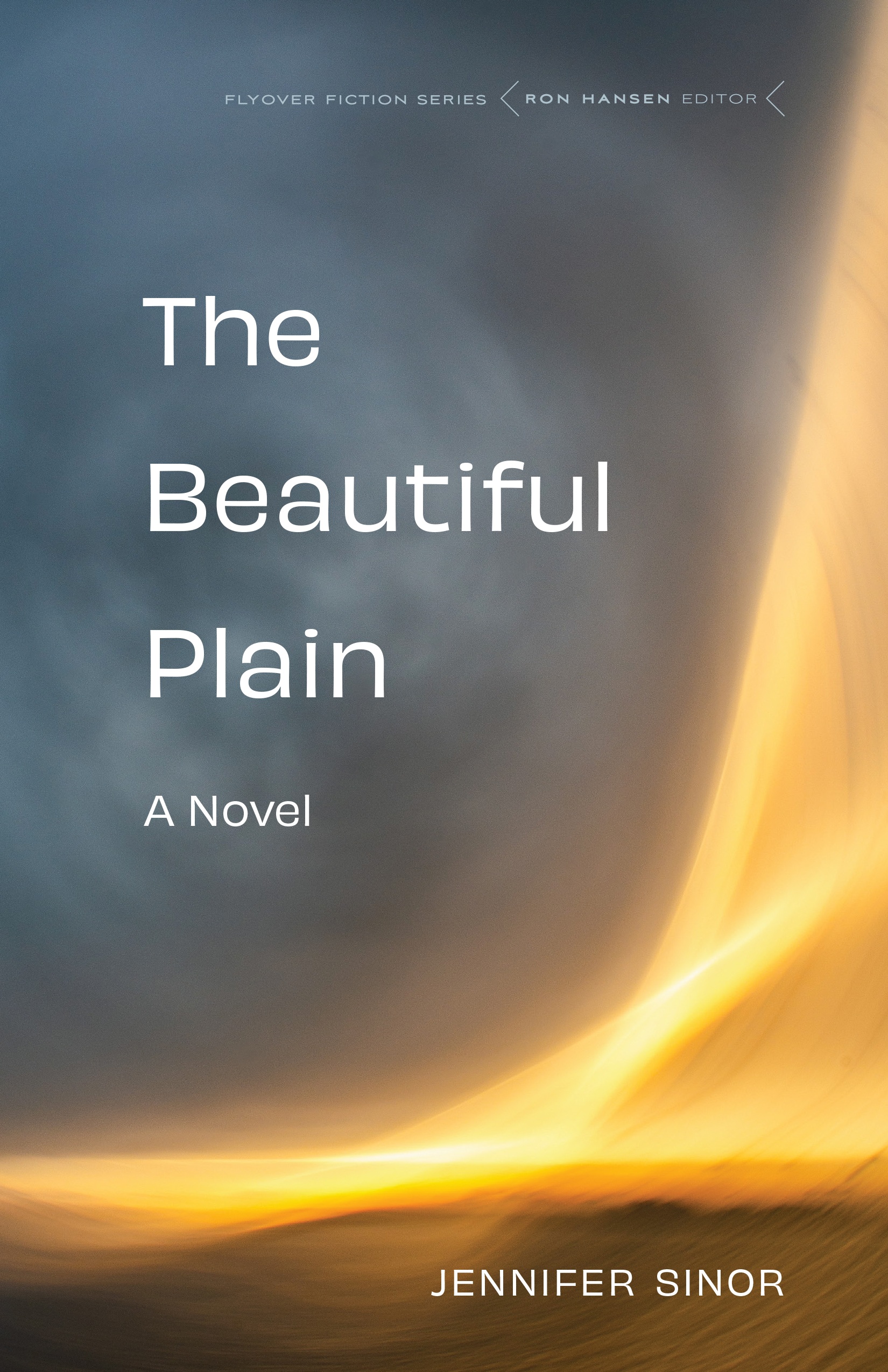
Jennifer Sinor is the author of several books, including The Yogic Writer: Uniting Breath, Body, and Page; Sky Songs: Meditations on Loving a Broken World (Nebraska, 2020); Letters Like the Day: On Reading Georgia O’Keeffe; and Ordinary Trauma: A Memoir. Her work has appeared in Best American Essays and The Norton Reader. She teaches creative writing at Utah State University, where she is a professor of English. Her new novel, The Beautiful Plain, is now available.
I want to unfold. I don’t want to stay folded anywhere, because where I am folded, there I am a lie.
—Rilke
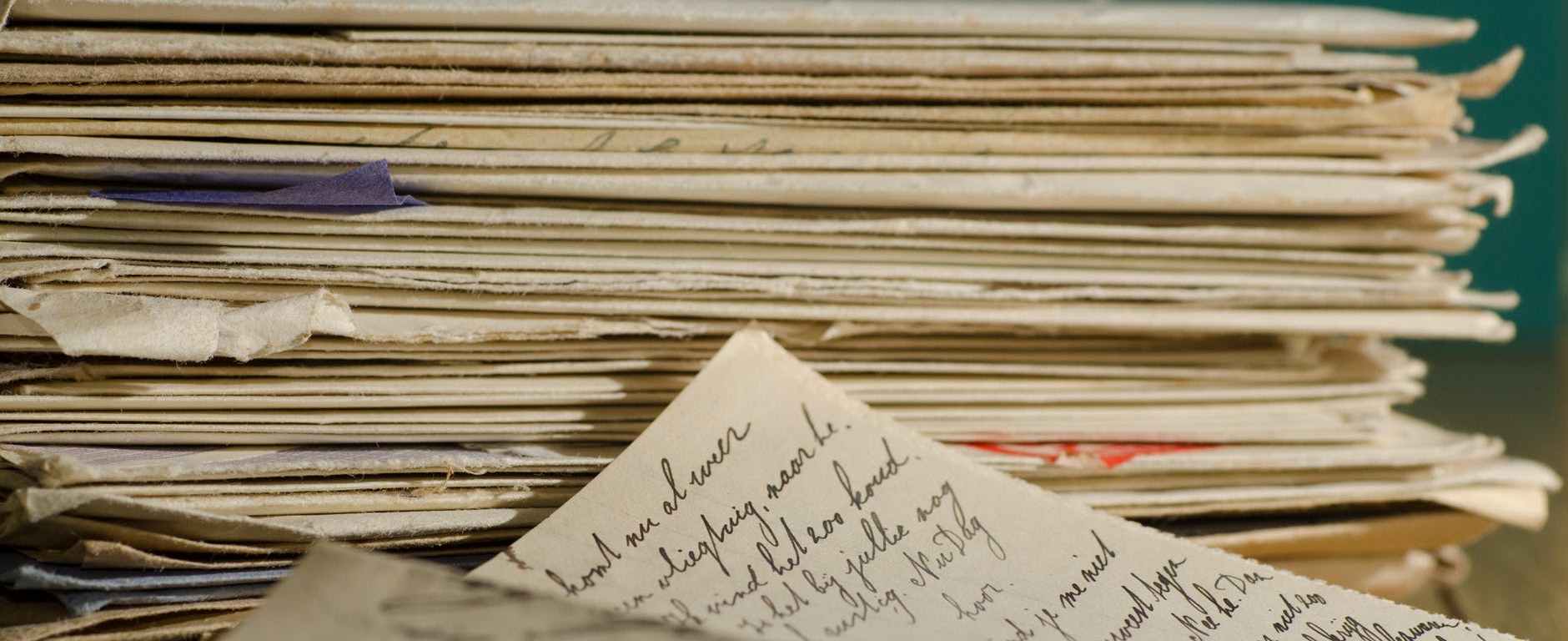
Many years ago—decades now—my great aunt handed me the diary of my great, great, great aunt who had homesteaded in the Dakotas in the late 19th century. I was newly divorced and twenty-five, an age when most people were maybe considering marriage. When I asked for the change of name form at my university, the woman congratulated me thinking I had just walked down the aisle.
I was also about to start a PhD program at the University of Michigan where critical theory would bury me within months. If asked, I would have said I was a failure or at least that I had failed. Up until my divorce, I had done “everything right.” I was a good girl who got good grades and tried hard not to disappoint anyone. Of course, all of this was a problem, and it would take me years to figure out who I was and what I wanted—but at the moment I was just so desperate not to fail again.
My great aunt, Billie Schuneman, the one who gave me the diary, was one of the first feminists I knew, though she would not have claimed the title, and I certainly didn’t think of her that way then. A large woman who grew up at a time when diminutive was the ideal, she had long ago stopped trying to make sure everyone around her was comfortable. She spoke her mind and could be terrifying.
I stopped to see Billie (or Great Billie as I had called her since I was three years old) on my way to Michigan. She told me about Annie’s diary, as well as about the diary that Annie’s husband, Charley, kept at the same time.
“I always thought they would make a good novel,” she told me. “It could alternate chapters. His experience and then her experience.” She wondered if I would write it in my graduate program.
I could not have written a novel then any more than I could have made my ex-husband love me again. But I took the diary to graduate school, not reading a single page. Habermas, Arendt, Foucault, and Butler became my constant companions with syntax I could not follow and diction that felt impenetrable. Soon I wondered if I had lost the ability to read at all. Nothing made sense. How was I living in an apartment in a state I had never visited, passing entire days without saying a word aloud to anyone, and arguing with all my heart against concepts like the public sphere?
Luckily, I took a course in anthropology from Ruth Behar, specifically a course in writing autoethnography, and I finally began to find some footing. Ruth focused me on my life and my world around me and suggested both were valuable. By my third year of graduate school, I knew I wanted to explore Annie’s diary, not because I wanted to write a novel but because I wanted to do the exact opposite. In those years, the diaries that were studied and lauded and valued were all diaries that had recognizable literary attributes. They contained sentences and paragraphs and revealed a flair with language. Characters lived in the lines. Metaphors sparkled like diamonds.
Annie’s writing contained none of these attributes. Her diary was bare boned. She wrote about baking bread, so, so, so much bread. She wrote of mopping—or really more just “mopped.” She had no stories that she wanted to record. Most diary scholars would have ignored her writing, a fact that infuriated me. Eventually, I learned to argue that she was writing her diary—bare boned, plain, and ordinary as it was—with authorial intention: as a way to remain sane on the plains.
My dissertation became a book. I was lucky. And others started to talk about diarists and their ordinary writing. Rather than further pursue diaries, though, I chose to follow the idea of the ordinary and began writing creative nonfiction—a genre that at the time was just appearing in the academy. Over the next twenty years I built my career as a creative writer. I thought I was done with Annie’s diary.
Then Laura arrived.
One of the most fascinating aspects of writing fiction, for me, as someone who has written nonfiction her entire career, is how the characters control the page. They start to act and move, and you, as the writer, are left to follow. Laura began to study the diary of her great, great, great aunt, a character named Agnes in the novel. That the diary appeared surprised me. Honestly, Laura just pulled it from her bag that fall. But I knew it was right. In the novel, I wanted to think about women on the plains and across time—how choice and agency had both expanded and remained limited. It made sense that Laura would look to the past.
I don’t know if Great Billie would be happy to see that Annie appears as Agnes in The Beautiful Plain. It’s not the double-voiced novel she would have had me write. But I know that Great Billie would have loved the attention I give to the landscape and the way I value the choices women make. I published the first book on Annie’s diary in 2002. My adult children were not even born then. So much has happened in that time, including the passing of Great Billie and the loss of some of that Dakota land. How I meet Annie on the page has changed as well. She has had so many lives—like all of us. No single version is more true than any other version.
At one point in my life, I would have been upset to see an ordinary diary brought into literary fiction. I would have been critical. But my children have grown and my father passed away a year ago, and it is very clear to me that life is much too short to practice limitation. I hope to always unfold.