Book Birthdays celebrate one year of a book’s life in reviews, social media posts, and more. This month we’re saying Happy First Book Birthday to Twinless Twin: A Novel (Nebraska, 2025) by Dean Marshall Tuck.
About the Book:
Twinless Twin finds a family maimed by a troubled, enigmatic son, whose unspeakable actions leave the family reeling, torn between moving on and searching for answers.
Set largely in twentieth-century America in the foothills of an unnamed mountain, this insular landscape breeds rumor, legend, desperation, daydreams, and a mystery that runs deeper than the family who inhabits its woods. Raising questions regarding culpability in the face of tragedy and the responsibilities of those who remain after a family has been splintered, Twinless Twin ultimately asks: What must be done to salvage the family, their reputation, and their homeplace?
A Word from the Author:
When I think back upon the genesis of my novel Twinless Twin, I think of two twentieth century authors—J. D. Salinger and Shirley Jackson.
In my twenties and thirties, I read and was somewhat mystified by J. D. Salinger’s Glass family stories, including but not limited to those found in Franny and Zooey, Raise High the Roof Beam, Carpenters and Seymour: An Introduction, and also “Hapsworth 16, 1924.” I couldn’t help thinking how cool it would be to have these largely stand-alone stories collected into a volume, what it would be like to read them side-by-side, how they might “talk” to one another. In these stories, the eldest Glass family sibling, Seymour (and the tragedy of his death), exists as a kind of looming presence despite being often absent.
I’d written a short story titled “Twinless Twin” somewhere in those years. My memory of writing the story is quite positive: the story came to me easily and required very little revision. In the story, a mother looks back over a lifetime of memories of her son, selectively choosing memories she feels may be linked to the eventual tragedy he is intertwined in.
When I decided to turn this story into the first chapter of a novel bearing the same name, initially I was only chasing the feeling I had when writing the short story, but somewhere in the planning stage, I realized I wanted to replicate this imagined volume of Salinger, and embedded into the DNA of this project was the decision to make the “twinless twin” character mostly absent. Instead, the book’s stories focus on his family, showing how his life and choices have affected them.
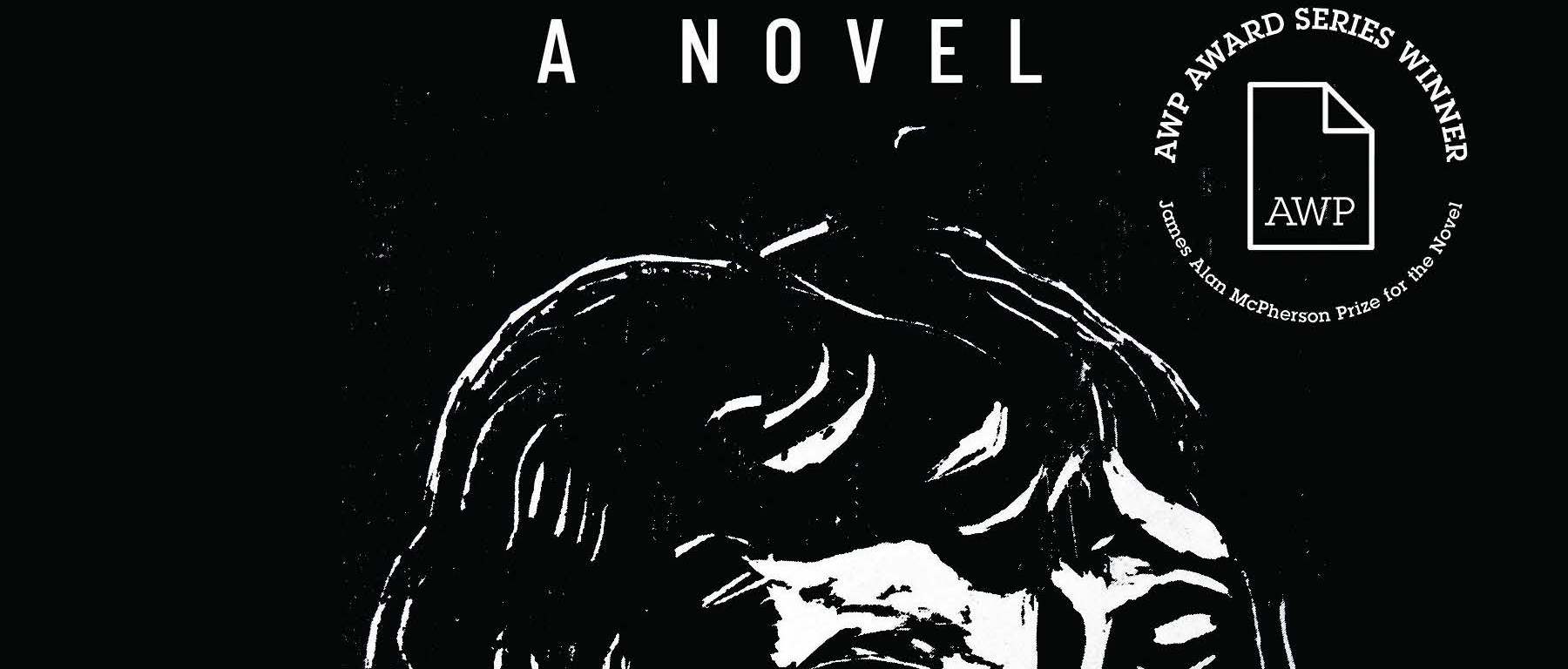
But another clear influence, particularly in theme and tone, was Shirley Jackson’s We Have Always Lived in the Castle. This book, too, is about an eccentric, troubled young person with an outsized impact on her family. Here, we have a broken family living in isolation, but their stasis is constantly threatened by the outside world, much like my book. Also, I love how the book refuses to date itself all that precisely—to me, it just feels old, happening several decades before whenever’s now. Certainly twentieth century. On that note, I still love that Edvard Munch woodcut on the cover—feels as old as the story, maybe a bit older.
In the end, that’s what I really hoped for with this novel. I wanted to write something that felt like a seldom-discovered, twentieth century novel you’d somehow overlooked but picked up on a whim, and now you can’t stop thinking about it, and you want to share it with a friend just so you two can talk it through with one another.
Try putting that in a query letter.
By design, the book defies easy categorization, but it is my hope the effect brings in more readers than it pushes away. I was fortunate Jason Mott chose the book for AWP’s 2024 James Alan McPherson Prize for the Novel which had the book published by UNP. He describes the book as “a dreamy tale that unravels with hypnotic precision,” and I hope readers will agree.
Reviews:

“[Tuck presents] an emotionally demanding novel that asks us to rethink what we know about the bounds of siblinghood, the dynamics between children and parents, and the weight of attachment to places our families have called home.”—Quinn Harris, South Caroline Review
“This tale is at once heartwarming and bewildering. It is a story with a cerebral pulse but somehow real blood and guts. … Twinless Twin asks how honest you are willing to be. Can’t you understand these folks? This is what it seems Tuck is reaching for in this fictive series of memories.”—A. Harold Hart, Appalachian Journal
“In the spirit of this magical in-betweenness, Twinless Twin also seems to exist amid multiple genres – it has elements of environmental literature, horror, fantasy, sci-fi, bildungsroman, and other subgenres. Yet, the novel’s lack of clear categorization also means that it will likely appeal to a broad swath of readers who will certainly glean different takeaways from Tuck’s wonderful writing, especially if one returns to its pages again and again”—Jessica Cory, NCLR Online
Awards:
AWP Award Series Winner: The James Alan McPherson Prize for the Novel

