From the desk of Kevin Grange


GrangeKevin Grange is an award-winning freelance writer who has written for
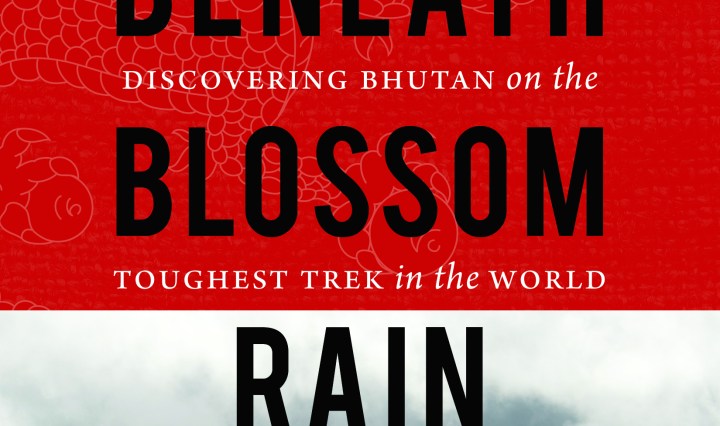
 Backpacker Magazine, National Parks Magazine, and the Orange County Register, among others. He has been to Bhutan four times and has completed the Snowman Trek three times, including twice as a guide. He is author of Beneath Blossom Rain.

The call came at dawn on the morning of the twentieth day: “Wake
up, Sir!” my guide Namgyel exclaimed, tugging on my tent door. “She is out!

By “She,” Namgyel meant Gangkhar Puensum, the massive mountain that
straddles the border separating Tibet and the country I was hiking through, the
tiny Himalayan kingdom of Bhutan. At 24,829 feet, Gangkhar Puensum is not only
the tallest peak in Bhutan, it is also the highest unclimbed mountain in the
world. From the moment we arrived at our campsite the day before, Namgyel had had
the task of “mountain watching,” with strict orders from the head chef to fetch
us the moment Gangkhar Puensum appeared in view. I threw on my boots, grabbed
my coat and camera, and unzipped my tent door.

Bhutan is a small country, about half the size of Indiana, wedged
between India and Tibet. Along with being the world’s most mountainous country,
Bhutan has the distinction of being the last Buddhist kingdom in the Himalayas,
of not having a single traffic light, of being governed by a policy of “Gross
National Happiness,” and of having the toughest trek in the world. At 216
miles, including eleven high mountain passes (seven over 16,000 feet), Bhutan’s
epic Snowman Trek is a 24-day boxing match for the hiking boots. More climbers
have scaled Mount Everest than have finished the Snowman Trek. Historically
less than 120 people attempt the Snowman each year and, of those, less than half
finish. Just some of the challenges of the trek include its duration,
notoriously bad weather, long mileage, high camps, and high elevation—all of
which mean there is a high likelihood something will go wrong. However, a
lifetime of traveling has taught me that it’s precisely these types of crucible
situations that can reveal new aspects of your character and lead to new
discoveries.

Having had the good fortune of traveling to Bhutan four times, I’ve
noticed a number of changes in myself since my first trip. I once struggled
with greeting someone in Dzongkha, Bhutan’s national language,
and yet, saying kuzuzangpo-la now seems as effortless as hello in
English. I also now intuitively walk clockwise around stupas (Buddhist
monuments), praise the gods like a local by shouting “Lha Gyalo”
from the high mountain passes, and have the good gastrointestinal sense to
request Bhutan’s mild chilies with my meals. However, perhaps the most striking
change can be seen in the pictures of my visits to the “Land of the Thunder
Dragon.”

Continue reading “From the desk of Kevin Grange”

Settlers of Catan: UNP vs University Libraries

Settlers_Library v UNPAfter weeks of organization and anticipation, two of the university's board game juggernauts met in Love Library on October 24, for a lunch hour throw-down. With scrupulous strategy, and a little luck, the University of Nebraska Press handily defeated their strong University Libraries opponents in a hard-fought game of Settlers of Catan.

Ultimately the game went the only way the UNP team could have predicted—with Terrance “the Bandit” Boldan, known for stealing games, doing what he does best and snatching victory from Richie “Cunningham” Graham and his fellow Libraries teammates at the last minute. This win represented the culmination of many Thursday lunch hours spent with fellow UNP staffers behind the board.

Going into the game, Graham and company held a strong aura of confidence. Even to the game’s final moments Graham could be quoted as saying, “Put the champagne on ice.” Graham and his team’s resoluteness would soon be silenced.

Settlers of Catan can be a ruthless game, and the UNP team proved it early. To start the game, Boldan cut Graham at the knees with a settlement placement that would attempt to cut off Graham’s plans for longest road. Library Representative Kane Click was also bested when UNP’s Weston Poor, after being denied a trade for wheat with Click, dropped the bandit in Click's lap and pilfered the wheat he needed.

Continue reading “Settlers of Catan: UNP vs University Libraries”

Xhenet Aliu: An up-and-coming writer

The following interview with author Xhenet Aliu was originally published in Illyria on Oct. 18, 2013. The interview was conducted by Uk Lushi, a writer
and translator who lives in New York City. 

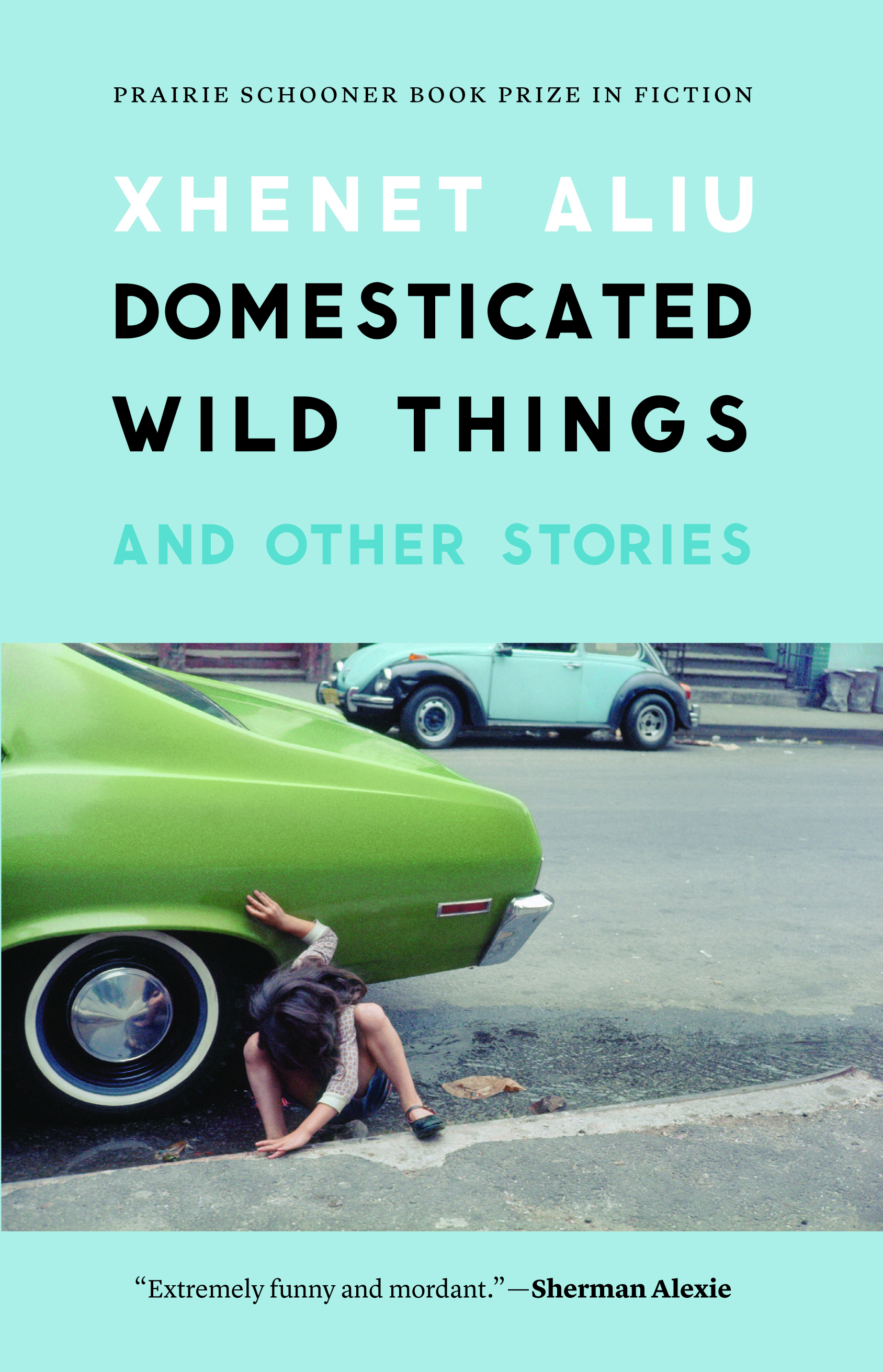
Several writer friends on Facebook asked me if I had heard of Xhenet Aliu. “She’s Albanian-American like you,” they said, “and an up-and-coming writer.” Her name sounded Albanian, but as far as her being an up-and-coming writer I had no idea since I’d never read her work. Long story short: after one of my Facebook peeps informed me that she’d won the 2012 Prairie Schooner Book Prize in Fiction, I said to myself, “Well, if you’re not good, you’re not going to win such a prize.” So, I ordered the book and enjoyed reading it thoroughly. As a result I purchased another copy for a member of my family and sent a Facebook friendship request to Xhenet. I learned that she’s in fact only 50 percent Albanian, but is indeed 100 percent an up-and-coming writer. Via Facebook messages we had the conversation below and after you read it I recommend you to buy and read her brilliant debut book “Domesticated Wild Things and Other Stories,” published by Nebraska University Press in September of 2013.

Who and where are you from?

I’m Xhenet Aliu, 30-something years old, native of Waterbury, Connecticut. My father, an ethnic Albanian, emigrated to the U.S. from Strugë as a young man and my mother was born in the U.S. and is of Lithuanian descent. I was raised in the Waterbury area, and though I haven’t lived there for over a decade, I still set most of my fiction there.

How and why did you become a writer?

The most critical part of being a writer, which is being a reader, is something I’ve always done. My brother Kyjtim used to read me picture books when I was a little girl, and I skipped over learning the alphabet and went straight into reading words. By the time I was in high school I was reading things that were probably too advanced for me, like Nabokov, Yeats, Kafka, etc. I didn’t begin writing until college and immediately knew that I wanted to do it forever; but I didn’t consider myself a “writer” until many years later. It was impossible for me to use the same word for Kafka and for myself, and I sometimes still struggle with that. Even after publishing a book, I feel like I haven’t entirely earned the label. 

Other writers that I greatly admire are Flannery O’Connor, William Faulkner, Roddy Doyle, Amy Hempel, and dozensif not hundreds– of others, who brought me around to more contemporary fiction and have greatly influenced how I think about voice, timing, conflict and precision of language. And of course I should not forget to acknowledge another of my favorite writers Ismail Kadare, who, with a few turns of phrase, can reduce entire histories to mere words, and, reciprocally, can expand a few words into entire histories. So, the writers I like most don’t just look for beauty in the obviously beautiful– they’re unafraid of grit and humor, where truth and beauty have often gone undercover.

AliuWriters such as Sherman Alexie and Kwame Dawes find your stories funny yet serious. Your book “Domesticated Wild Things” is full with biting humor, sharp wit, double-edged beauty of characters, and subtlety of language. It’s not easy to pair up humor and seriousness: is it real life experiences or artistic imagination that inspired you to create your stories?

I would say that real life and imagination play an equal role in my stories. Even if I were to write science fiction, my own actual life experience would inform my perception of what life would be like in a world that’s, say, suddenly been taken over by Martians. I’ve never witnessed a spaceship land in Central Park, but I can speculate how we would respond to it based on my past experiences watching humans respond to other shocking, terrifying, dreadful experiences. That said, I currently prefer to write realistic fiction because I’d rather just directly address the shocking, terrifying, dreadful experiences we’re more likely to encounter in our actual lives. It feels less coy to me, but that’s simply my preference. Even though the world in my stories resembles something “real,” though, I feel no allegiance to any kind of fact that doesn’t serve the truth of the story. Perhaps I read a story in the newspaper that inspires me to write a fictional account of the participants involved; if I find that the characters would serve my purposes better if they were of the opposite sex, or if the setting was a slum in another part of the world, then so be it. Studies have shown that imagined experience works as well to exercise our empathy as actual experience, so I feel justified going back and forth between the two.

As for the humor, the truth is I wouldn’t know how to engage with the world without it. Life is absurd as often as it’s beautiful and sad, so I would feel like I created something incomplete if I left it out of my fiction.

Continue reading “Xhenet Aliu: An up-and-coming writer”

The Marketeers Club: Neon is not a good look for Mommy

Since it’s my turn to write a blog post this week, and I’ve recently become a mother for the second time, the natural suggestion from the marketing group was to write something about motherhood. “Really? You want crazy?” I thought jokingly. My husband and I welcomed our second son into our family over the summer, making us a “two kids under the age of two” household. Plus, we have an additional family member in the house: a 100-pound polar bear (okay, a white Labrador) named Cooper. With the new baby on board, a toddler trying to get potty-trained, and a … Continue reading The Marketeers Club: Neon is not a good look for Mommy

Doc Martyn’s Soul: Working for a University Press

Those of us who work for a university press are already well aware that we should count our blessings. Sure, there are frustrations and difficulties to deal with, but for the most part, I think they are common to any job anywhere. However, I find much to make me think that I am extremely fortunate to be in the publishing world and tied to an institution of higher learning. I was reminded of this great fortune recently when I attended the E.N. Thompson Forum on World Issues lecture at the Lied Center in Lincoln. The speaker was David Wessel, a … Continue reading Doc Martyn’s Soul: Working for a University Press

Fifty Years: Remembering Medgar Evers

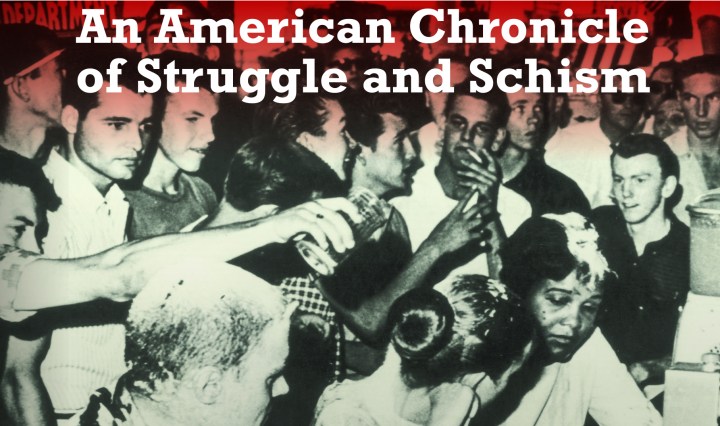
The following article by John R. Salter, Jr. first appeared in Against the Current, issue #165John R. Salter, Jr. (Hunter
Gray) is a long-time activist, social justice community organizer, and radical
university professor who now lives in the mountains of Eastern Idaho. His book, 
Jackson Mississippi: An American Chronicle of Struggle
and Schism
, is published by the University of Nebraska Press (2011). The Journal of Southern History called Salter’s book an “Essential reading. . . . A valuable account of events and insight into the internal dynamics of the [civil rights] movement.”

9780803238084Around 2 AM, September 1, 1961, my spouse Eldri and I crossed the
Mississippi River into the Magnolia State’s Closed Society. We were both in our
mid-20s. Married a few weeks before at Superior, Wisconsin, where I had done an
academic year of college teaching, we had come directly from my home town of
Flagstaff, Arizona. We were headed to private and all-Black Tougaloo Southern
Christian College, just north of Jackson, where a teaching position awaited me.
A sociologist, I also had a fair amount of grassroots organizing under my belt
and, before long, was to have much more.

At that point, the State
of Mississippi was very close to police state status. With its sanguinary
history, expanded and dominated by the post-1954 white Citizens’ Councils of
America (“State’s Rights and Racial Integrity”), it was a total and pervasive
segregationist complex, backed up by legions of white “lawmen” and
white vigilantes. African Americans, almost half the population, were kept
“down,” deprived of the right to vote or demonstrate, and mostly lived in
or close to poverty. Most whites either supported the system or remained
silent.

I came to know Medgar
Evers, Mississippi Field Secretary of the NAACP, very well from 1961 to his
death. Early after Eldri, and I arrived at Tougaloo, I was asked by an activist
student, Colia Liddell (later to become Colia Liddell Lafayette Clark), if I
would be the Advisor to the newly developed North Jackson Youth Council of the
NAACP. Very small at that point, it was the only youth council in Jackson and
environs. Of course, honored, I accepted. Not long thereafter, I become a
member of the board of directors of the Mississippi NAACP, and, still later, as
we entered a period of dramatic turbulence, chairman of the strategy committee
of the Jackson Movement. I worked with Medgar closely. And I always had
tremendous respect for him.

There was a significant
strain of Choctaw Indian in his family background. I, myself, am one-half
American Indian (Abenaki and Mohawk) — and that was only one of a number of
bonding factors that quickly developed between us.

Born in Newton County in
1925, he served in the European Theatre during the Second World War, was
educated at all-Black Alcorn A&M, and in 1954 became the first NAACP Field
Secretary in the history of the state. He wasn’t really an organizer; was sort
of a lone wolf who traveled lonely and mighty dangerous trails. He kept the few
dissidents that existed in the state together in little groups that did as much
as they felt they could do; persuaded people to attach their names to pioneer
civil rights lawsuits; investigated and tried to publicize the many atrocities
which occurred each week. And, on orders from the National Office, he sold
NAACP membership cards.

Medgar was a very stable,
very cool person. The only time that I ever saw him break down came in the Fall
of 1961, at an evening dinner session of the annual convention of the
Mississippi NAACP — in the “Negro” Masonic Temple on Jackson’s Lynch
Street. It was first time we had met him — and I was much impressed by his
cheerfulness and optimism. The police were parked outside and, inside, the
delegates from the scattered, and generally moribund NAACP units around the
state, had finished giving their reports.

Continue reading “Fifty Years: Remembering Medgar Evers”

Spotlight on our 2013 Nebraska Book Award winners: Called to Justice

Nebraska Book Award winner: Nonfiction (Autobiography) Called to Justice: The Life of a Federal Trial Judge By Warren K. Urbom Foreword by William Jay Riley Read an excerpt “In describing the extraordinary professional challenges and life-altering personal tragedies he has … Continue reading Spotlight on our 2013 Nebraska Book Award winners: Called to Justice

Spotlight on our 2013 Nebraska Book Award winners: Light on the Prairie

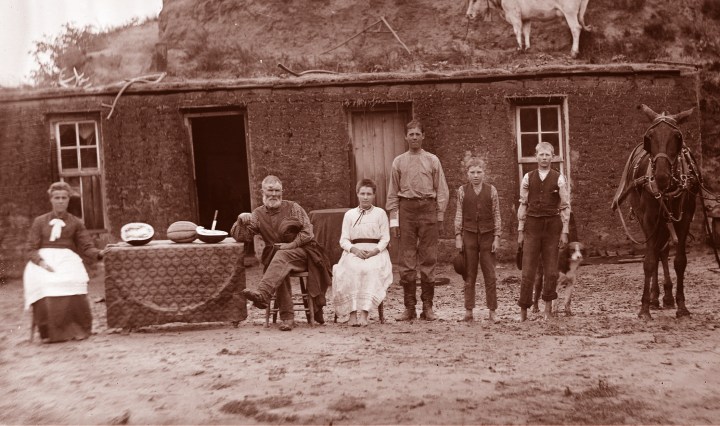
Nebraska Book Award winner: Youth Nonfiction Light on the Prairie: Solomon D. Butcher, Photographer of Nebraska’s Pioneer Days By Nancy Plain “Nancy Plain’s Light on the Prairie . . . places Butcher’s work in its historical and sociological context, and provides a … Continue reading Spotlight on our 2013 Nebraska Book Award winners: Light on the Prairie