Lisa G. Dill is an adjunct professor of creative and environmental writing at the University of Delaware. Her new book Around the Bend: Floating Down the Missouri River (Bison Books, 2026) was published this month.
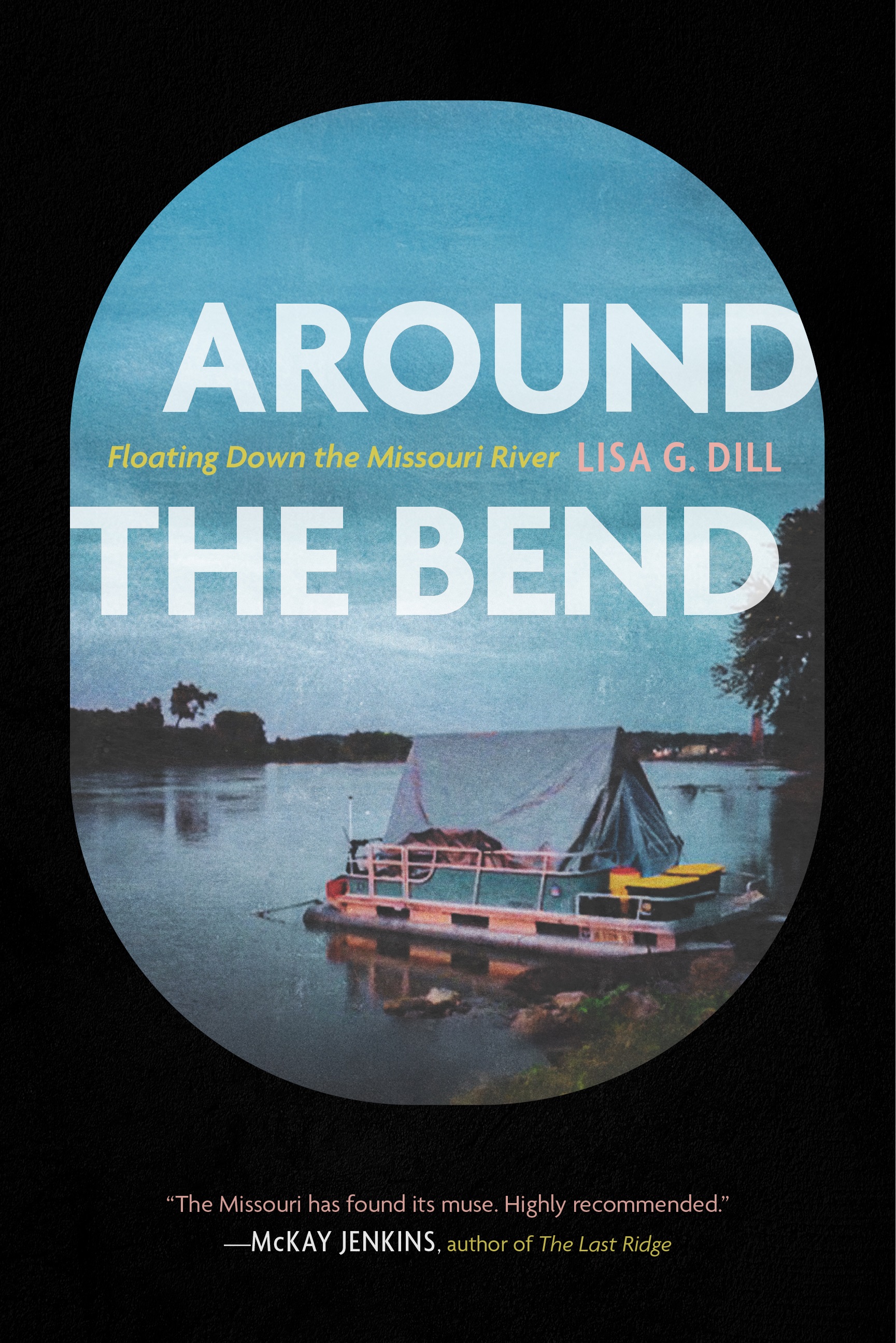
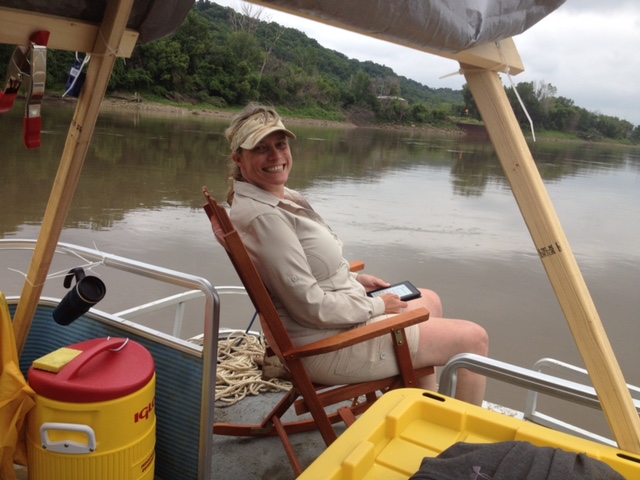
A lot of people have asked me whether I knew I was going to write a book when I set off on my trip down the Missouri River. I did, though I didn’t know at the time what that book would look like. I knew that two weeks living on a river, any river, would give me plenty to work with. I just had no idea what that might be. When we set sail, I had a blank journal, a pen, and hopes that the river would show me who it was. As I wrote at the end of the book, the river was always going to give me whatever it was going to give me, and my job was to figure out what to do with that.
While on the river, I jotted down everything I noticed. I kept a running hash-mark total of Bald eagles on one page, until about nine days in, when we got to a stretch of the river about twenty miles west of St. Joseph, Missouri and I saw so many eagles I couldn’t count them all. I wrote down funny comments the cousins made, funny comments people on the shore made, and everything I observed that I didn’t understand. I took photos with my camera and photos with my phone. I recorded the weather, the insects, the birds, the visible signs of engineering, the flood lines, and whatever metaphors I could think of to describe the water. (Mud? Peanut butter? Coffee with a lot of cream?)
After the trip, during the drive home from Iowa City to Wilmington, Delaware, I decided to structure the book through chapters. Each chapter would correspond to a day of the journey and focus on a different aspect of the river. One of my teachers observed that I needed to include at least some of my story along with the river’s story. “Readers need people to hang onto,” he told me. I decided to move back and forth between life on the boat and the chapter subjects.
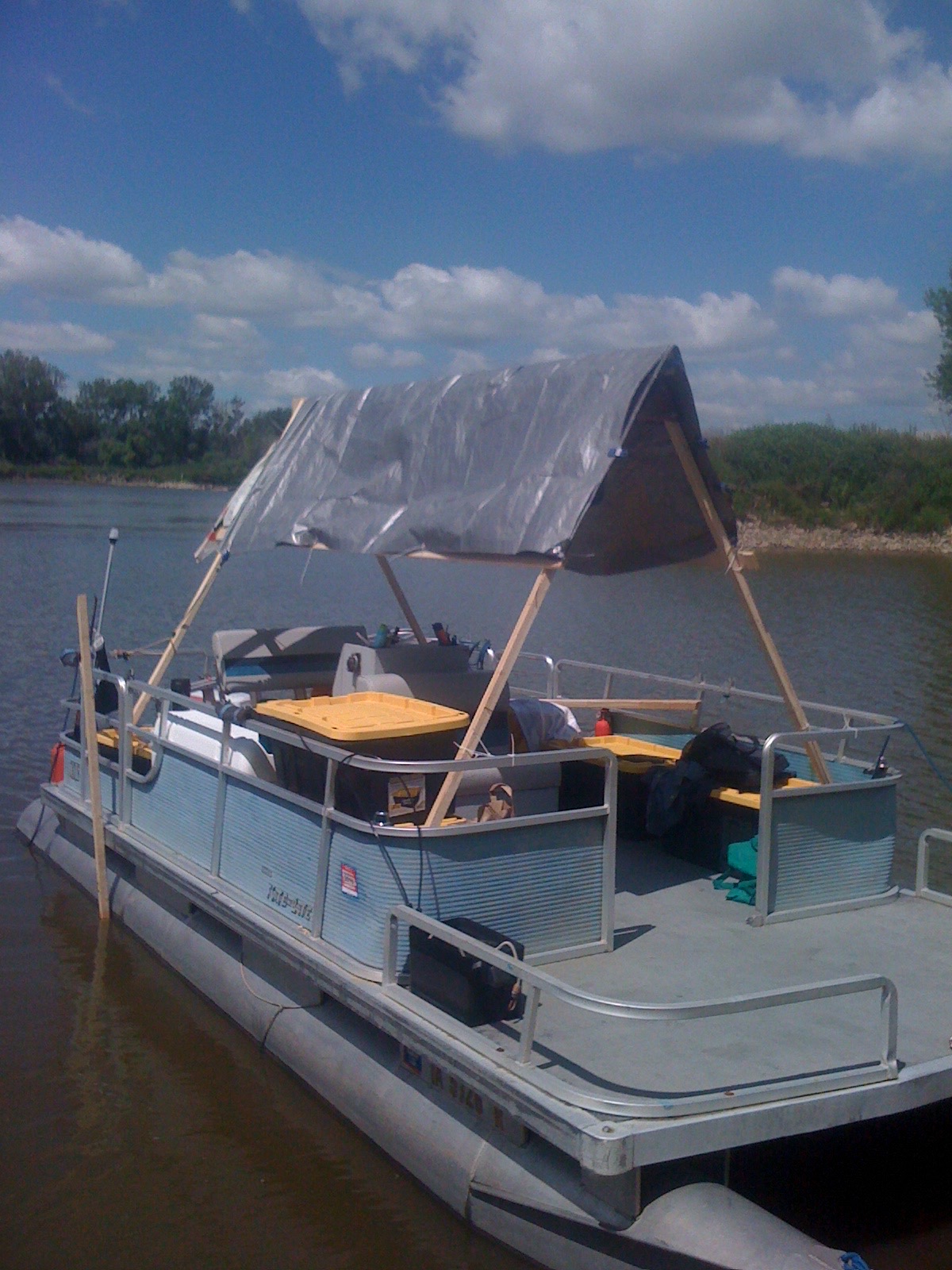
This was easier to do in some chapters than in others. I held my own messy journal up to those of the Corps of Discovery for side-by-side comparison. Asian carp leapt next to the boat at least once a day, making invasive species an obvious choice. Possibly the most personally-centered chapter is the final one, about how the river is governed, because getting pulled over mid-river by the Missouri State Police was the closest I ever got to any of my subject materials, and probably the funniest half-hour of the trip, once my blood pressure came back down.
For most of the chapters, though, I worked as hard as I could to create transitions, to figure out ways to move gracefully from the complexity of underwater engineering, flood data, and endangered species I hadn’t seen to the experience of sailing what one relative called “elderly flotsam” down the longest river on the continent. I sifted through mountains of research, looking for not just the important historical facts and scientific data, but for ways to connect it to the story of the trip, the story of my family, the story of the 40-year-old pontoon boat that somehow survived 750 miles on the Missouri River intact.
It didn’t give me much drama, apart from huge dredge boats, one day of very bad weather, and the constant question of whether we would sink. At best, it gave me impressions, suggestions, hints of what lay under its murky surface. As it has throughout its long history, the Missouri River makes you earn the right to live by it or work by it or play on it. Or write about it.
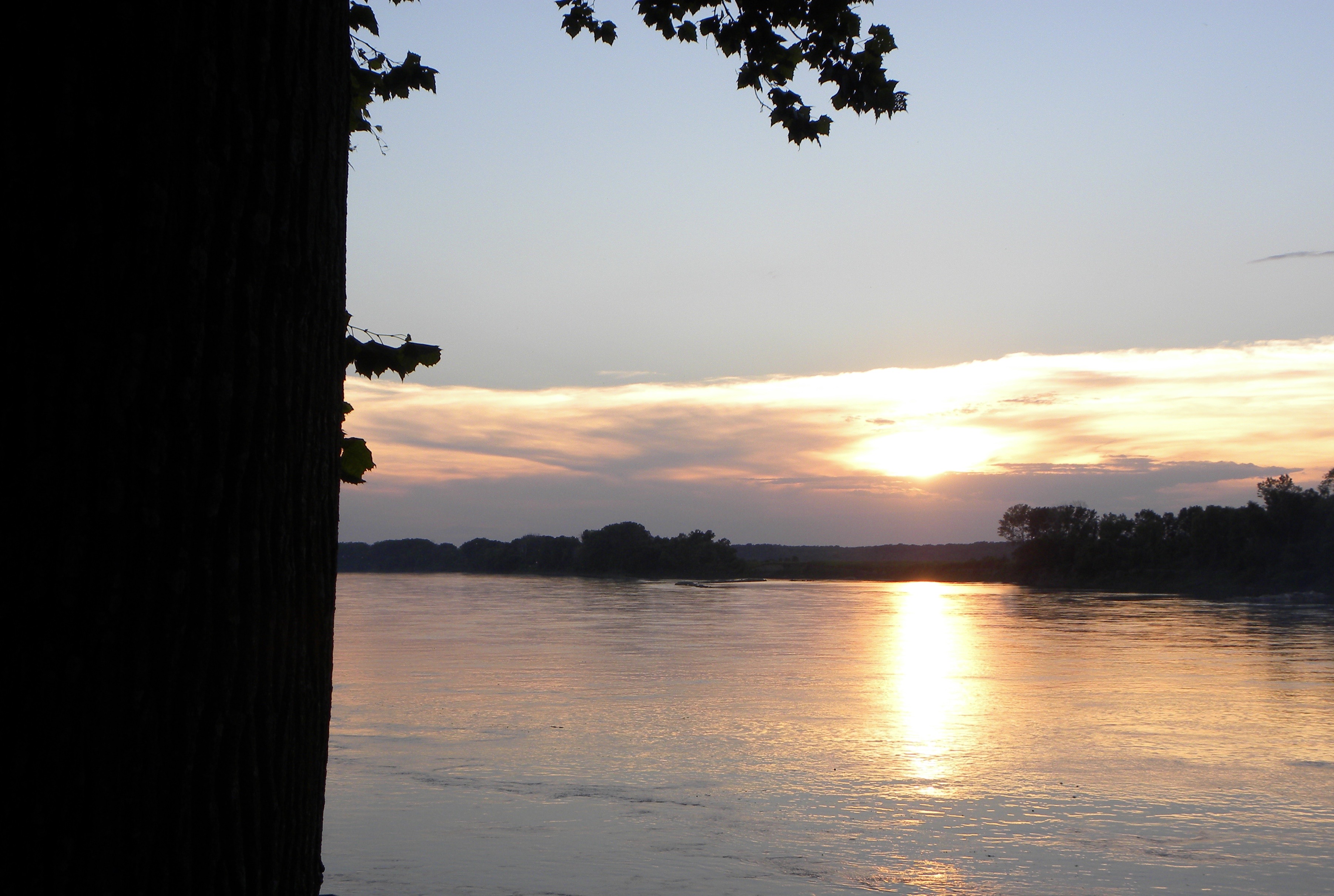
Some rivers float liltingly over waterfalls, or whisper through old-growth forests, or flow sinuously through deserts. The Lower Missouri roars through the farmland, prairies, and cities of the Midwest, menacing and essential, muddy and arresting, only visible in snatches, in a glimpse from a bridge or atop a levee. But it is a beautiful, ancient river, resisting our controls, holding on to its secrets, making us work to appreciate it. As we should.

