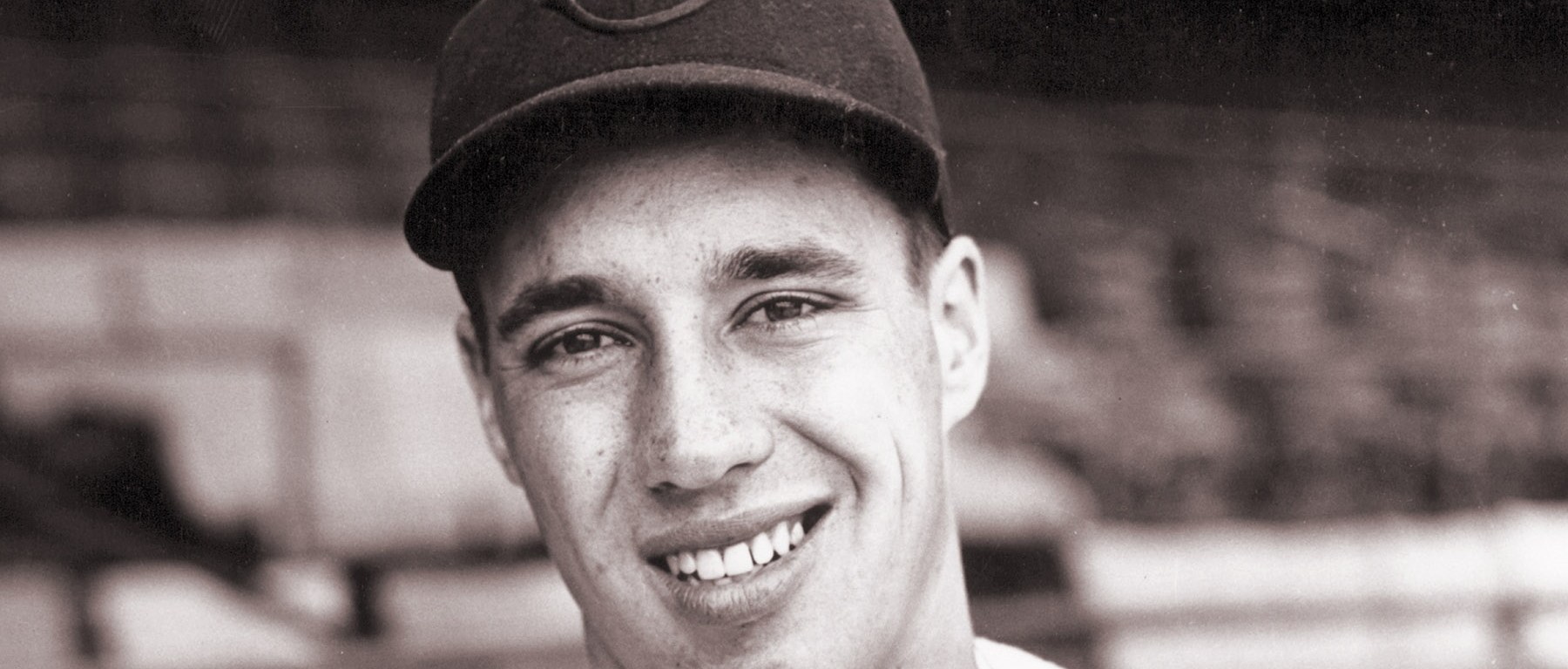
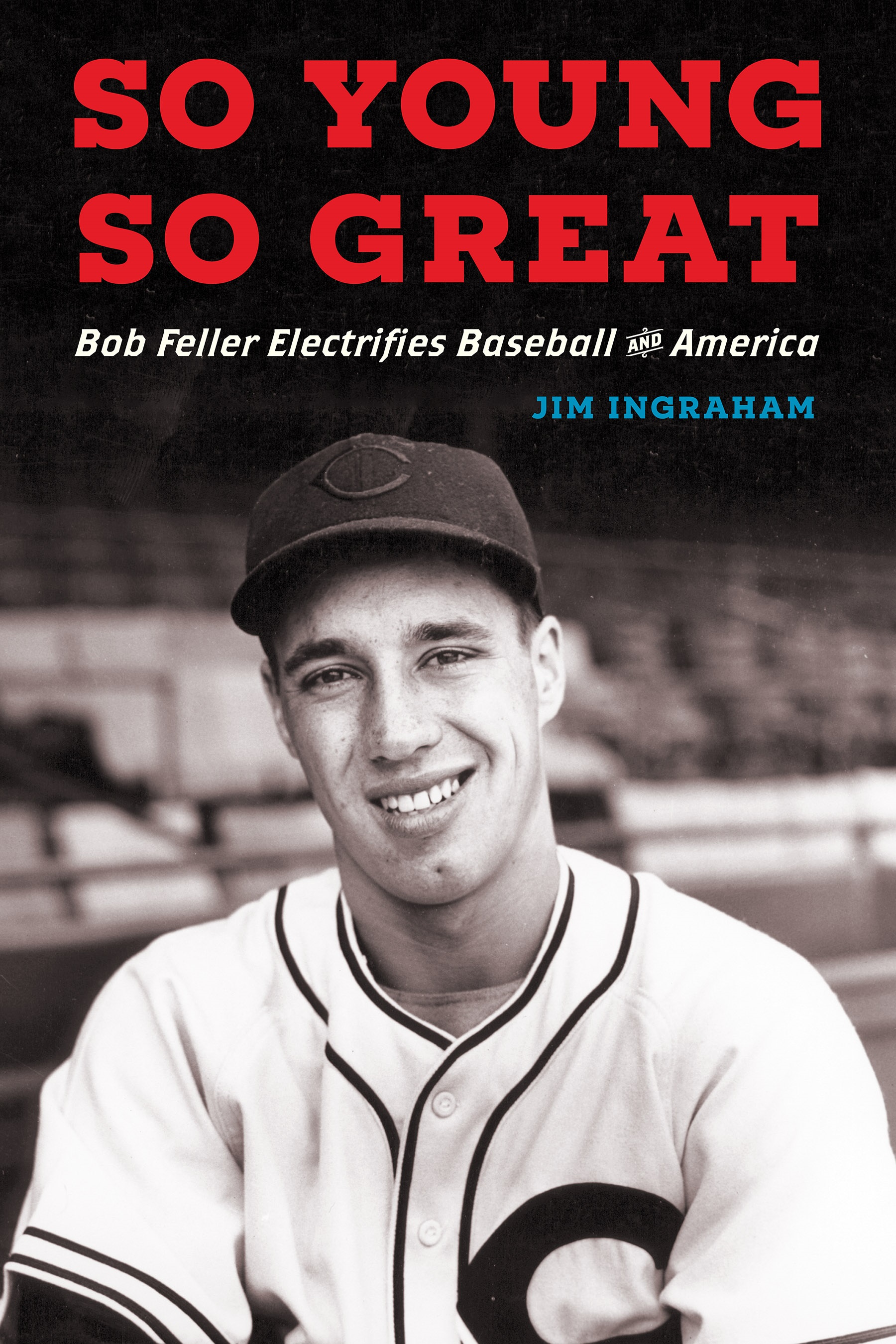
Jim Ingraham is an award-winning sports columnist for the Elyria Chronicle-Telegram in Ohio. He is the author of Mike Hargrove and the Cleveland Indians: A Baseball Life. His most recent book So Young, So Great: Bob Feller Electrifies Baseball and America was published by Nebraska in June.
When Bob Feller hit the Major League Baseball scene, he instantly became one of the most famous athletes in the country. Everything Feller did made headlines, primarily because anything he did had never been done before, especially by someone his age. To this day, Feller is the only pitcher to have signed his first professional contract and played in the Major League while still in high school. By the age of seventeen he had set an American League record for most strikeouts in a game, and by nineteen, he had broken his own Major League strikeout record.
So Young, So Great covers the first six years of Feller’s career, from 1936 to 1941, from his discovery in the small town of Van Meter, Iowa, as a high school junior, to his immediate entry into the Major Leagues with no minor league detours, the extensive media coverage of his every move and his box office appeal to fans, and his record-breaking feats up to his enlistment into World War II at age twenty-two.
1
Once Upon a Time, There Was an Arm on a Farm
I knew I was looking at an arm the likes of which you see only once in a lifetime.
—Cy Slapnicka
On November 3, 1918, U.S. Army Headquarters in Vienna announced that Austria had signed an armistice, removing itself from World War I. North of Verdun, the hard-charging American First Army, under General John Pershing, was turning a German retreat into a rout. In New York City, Al Jolson was in his thirty-first week at the Casino Theater.
On that same day, 1,129 miles west of New York City, in tiny Van Meter, Iowa—total area 1.3 square miles, estimated population 365—Lena and William Feller welcomed their first child into the world.
A son.
As the new arrival was being washed, weighed, and measured, he was only seventeen years away from setting the American League record for most strikeouts in a Major League game.
He was Robert William Andrew Feller. He arrived early and stayed late. Bobby Feller would become Bob Feller, and only Bob Feller, his entire life—all ninety-two years of it. Not once in those ninety-two years would he have a real job, a serious, full-time, nine-to-five occupation. His job was baseball and being Bob Feller. That was it. That was his life.
Bob Feller, baseball player.
He always knew what he wanted to be, because his father always knew what he wanted his son to be. And the father was determined to make it happen. Not once did the terms of the family crusade waver.
“It’s still amazing to me how firmly my father believed that I couldn’t miss becoming a big leaguer,” Feller said in Strikeout Story, his autobiography, published in 1947. Sometimes father and son would go into town to pick
up supplies for the farm, and when the two of them walked into an establishment, Bill Feller let the other adults in the store know that if they played their cards right, when Bobby became a big leaguer, he would be sure to get them tickets to the World Series. Such bravado prompted a chorus of chuckles that embarrassed the father’s son but not the son’s father.
“I want him to play baseball,” Bill Feller told his wife, shortly after Bobby’s birth. “I don’t want him to be a farmer. Baseball is a good life.”
To that end, baby Bobby hit the ground not running but throwing. Before the infant could even walk, he and his father would play catch in the house. Bill would sit on the couch and roll a small rubber ball to his son, who would fire it back to him. Bill would use a pillow to catch the two-year-old’s heater.
Thus started a daily tradition that lasted virtually to the day—like a scene out of a movie—Indians’ scout Cy Slapnicka waded through the wheat field on the 640-acre Feller farm looking for the boy with the golden arm.
Bill Feller began nurturing his pitching prodigy from the moment the boy started walking. When he was not playing ball, he was practicing it. For most of the boy’s first dozen years, Feller the father and Feller the son played catch three times a day, out by the barn, including every day after school, but not before the son did his farm chores.
He played for his grade school baseball team, which regularly beat the high school team, especially when he pitched. He had been throwing curveballs since he was eight. “By the time I was nine,” he said, “I knew I could throw a baseball faster than anyone else.” It was about this time when Bill Feller sensed the potential for greatness in his son.
“I knew it by the way he stood on the mound out there behind the barn and threw,” Bill Feller said. “Bob had it all. Rhythm, timing, follow through, and form. A little crude, but he had it all.”
The kid’s arm was astonishing. That is what impressed everyone the most. One day Bill got a tape measure. He handed a baseball to his son and told him to throw it as far as he could. Bobby did. Bill measured it: 275 feet.
Bobby was only nine years old.
When he was twelve, the 5-foot-2, 140-pound Feller farm boy joined the Adel, Iowa, American Legion team. Adel was a nearby town, but three times larger than Van Meter. Although he pitched occasionally in grade school and in Legion ball, Feller played mostly third base and shortstop. He idolized Cardinals’ infielder Rogers Hornsby. One day, late in the Legion season, he was sitting on the porch of the farmhouse with his father. The chores were done. The sun was setting, and of course, the talk was about baseball. Bill Feller suggested to his son that he concentrate solely on pitching.
“You can throw hard enough to knock a bull down,” Bill Feller told him. “In a couple of years, you’ll throw faster than any one of those big leaguers.”
The father paused and smiled. The son nodded. The deal was struck.
It was a moment that changed the course of baseball history, when father and son mutually agreed to fully commit to the development of what Sports Illustrated’s Frank Deford called “as fantastic an arm as God ever attached to a shoulder.”

