Debut novelist sid sibo enjoyed a public lands career in environmental/social analysis and communication, and lives on a small farmstead with over thirty other-than-human animals. Read more about sibo’s passion for people and planet on the Acoustic Burro blog at www.sidsibo.com. sid sibo’s book The Scent of Distant Family (Bison Books, 2024) was published this month.

When UNP categorized my debut novel, The Scent of Distant Family, as Western fiction, my instinctive cringe must be forgiven. Even including the word “contemporary” along with a standard online search for “Western fiction” will yield stories set in the past, despite recent publications. These days see more realistic and diverse depictions of our history, such as Pulitzer and Spur Award-winning Cherokee writer Margaret Verble’s stories with nineteenth and twentieth-century settings that include broad cultural diversity. We can enlist the power of fiction to understand our histories and the wide variety of contemporary Westerners.
The mythical identity of the American West is just that: a myth. Many books from UNP make clear that the past West was in many ways a false—or extremely limited—reality to begin with, an image held up for malign purposes of colonial justification. Though search engines might not find them under “Western” fiction, many writers from Leslie Marmon Silko to David James Duncan lead readers into the West of today. In The Scent of Distant Family, depicting a twenty-first-century high-desert landscape with broad cultural diversity should not cause eyebrows to lift. An Indigenous Australian college exchange student who gave birth to a mixed-race son is not far-fetched, and neither is finding a snowplow driver who grew up on a Minnesota reservation now living off-reservation in Wyoming with his Shoshone family.
When we consider what writing the new or contemporary American West might mean, then we can question how much change we’re talking about, relative to what was already here, no matter how little visibility it may have been accorded. Not simply for the sake of truth, but also for considering a triple-sustainability goal much lauded—and sometimes misunderstood—in community planning efforts across the West. Economists, in the West’s classic extractive resource-dependent structure, considered sustainability when timber industries couldn’t replenish their source material as fast as they depleted it. Ecologists have long worked to sustain a balance of functions that evolved to create the West’s iconic outward forms, with the planning goal to manage within a “range of historical variability.”[1] Sociologists jumped on the bandwagon by demanding social sustainability, and here, mistaking the words maintain and sustain rises to haunt us. While cultural diversity might have been much more present than admitted, some find its increased presence in literature at best strange, if not strangely disconcerting.
Social sustainability cannot be the maintenance of a self-defeating status quo, no matter how strongly a social identity might be tied to it. To provide for a long-lived, thriving community, resilient enough to withstand inevitable changes and potential shocks: that is the social sustainability goal. As with ecology and economics, cultural diversity offers options needed in the ever-uncertain future by providing alternative ways of thinking and behaving. With post-COVID-19 refugees realizing the ease of telework and flocking to the West for their piece of its fabled “expansiveness,” no amount of planning or hopefulness can overcome the realities of physics and ecology. But no amount of technical information has been able to pull the weedy wool from our eyes.
Fiction can be a helpful path to open urgently needed conversations, not just in the West itself, but in those places people flee from. Back in the early 90’s, historian Patricia Limerick emphasized the importance, for conservationists, of improving U.S. cities. The effort may have had some success, but it preceded the widespread adoption of remote work. Her admonition also preceded widespread recognition of the cascading ramifications of our fossil fuel-driven lives. Despite known and increasingly expensive impacts, our personal and systemic addictions to individualism, comfort and speed incarcerate us in climate chaos.
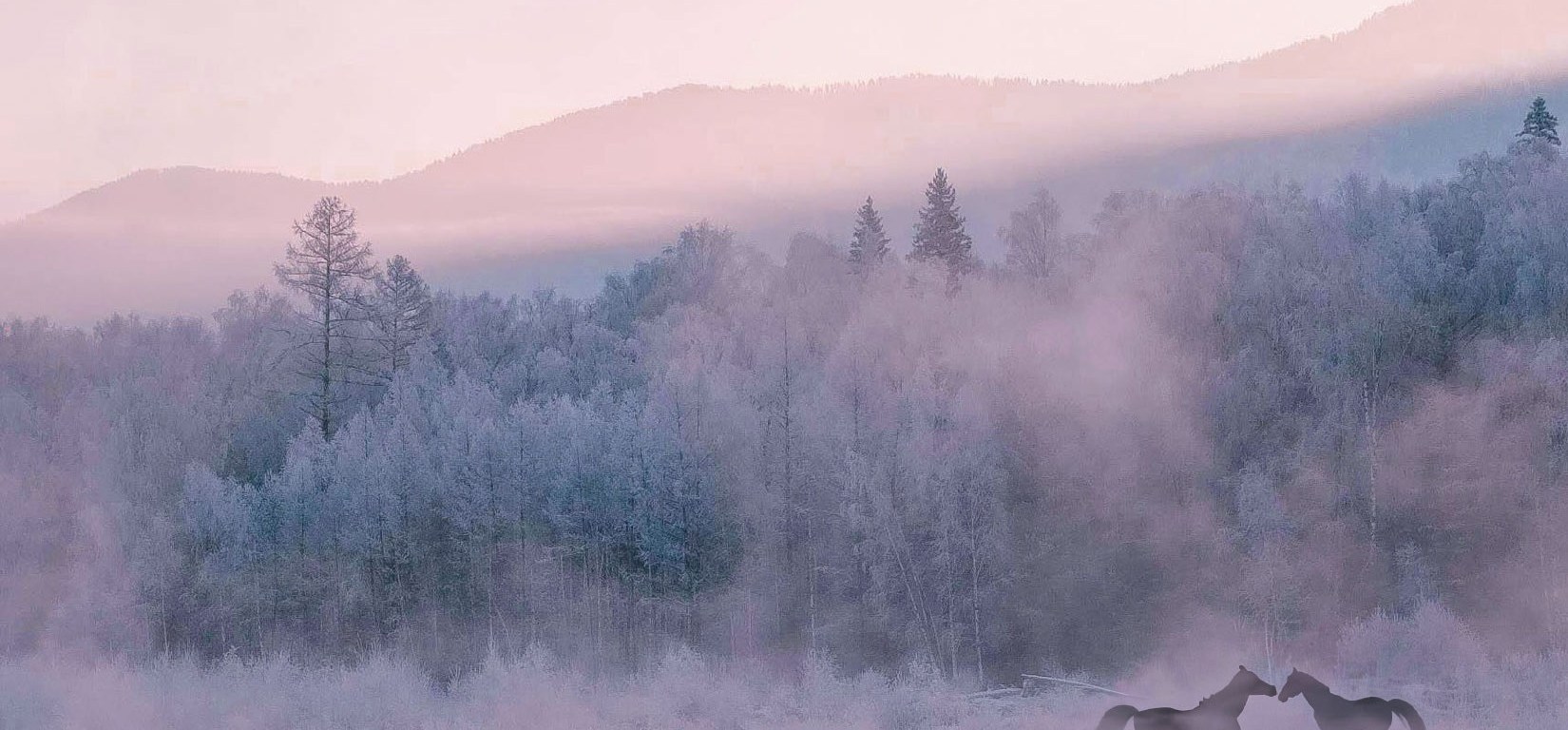
Of the West’s most iconic images, wild horses rank high, and two shadowed mustangs greet each other across an icy river on the cover of this novel. Many high-profile thinkers urge our society to discard the embedded sense of human superiority that underlies our apparent willingness to sacrifice the planet we rely on. This story uses a parallel structure to give readers insight into how both a lost dog and a mustang band experience challenge and change. These short sections portray animal agency that has long been ignored in adult literary fiction. As in Talia Lakshmi Kolluri’s recently published collection, What We Fed to the Manticore, animals other than humans help carry the story. Writing the contemporary West mirrors the opening of Western culture’s too-monolithic understandings across the World.
This is not a climate novel, nor about racism, or human-animal bonding. Humans might recognize unconscious bias in someone else, or they note preconceived values that don’t serve the greater experiment of Life. All characters wrestle with intersecting changes and must experiment their ways forward, as life always has. Experiments that surface might be traditional to cultures far older than the “old West,” or they may be as new as a climate that hasn’t been experienced since before humans evolved. Communities across the high plains and Rockies are changing, and so is fiction. Both shifts—and this book—open space for curiosity and conversation.
[1] This goal has been recognized as frequently outside scientific capacity, given unprecedented climate turmoil. That is, however, another essay.
Upcoming Author Events
September 14, 11-1:00 p.m. MT talk at Wind City Bookstore, Casper, WY
September 24, 6-7:30 p.m. MT at King’s English Bookshop, Salt Lake City, UT
September 27, 6-7:30 p.m. MT at Valley Bookstore, Jackson, WY

