
Bill Thorness’s varied work as a journalist has spanned more than thirty-five years, from early work as editor of a national business magazine to current work as a freelance travel writer for the Seattle Times. He is the author of five nonfiction books, including Cycling the Pacific Coast: The Complete Guide from Canada to Mexico. His new memoir All Roads Lead to Rome: Searching for the End of My Father’s War (Potomac Books, 2024) was published this month. Read more from Bill on his Substack “Annotations.”

I hobbled up to the old Barberini Palace atop Palestrina, whose stone walls resonated heat in the afternoon Italian sun. Leaning on a handrail to take pressure off an aching foot, I looked down to a subterranean excavation that showed the building’s history behind a wall of glass. My wife Susie and I, with our host Ivano Bruno, were exploring this ancient Lazio hill town east of Rome and I hoped the town’s archeological museum would tell us more of the amazing story that took place when my dad was fighting in this area with the Allies in World War II.
We learned that Palestrina was nearly bombed into oblivion that year, 1944, but the wartime devastation uncovered an incredible, unremembered past. I felt a kinship with my own discovery of family history that was unfolding for me in the quest to write the story of my father and his war.
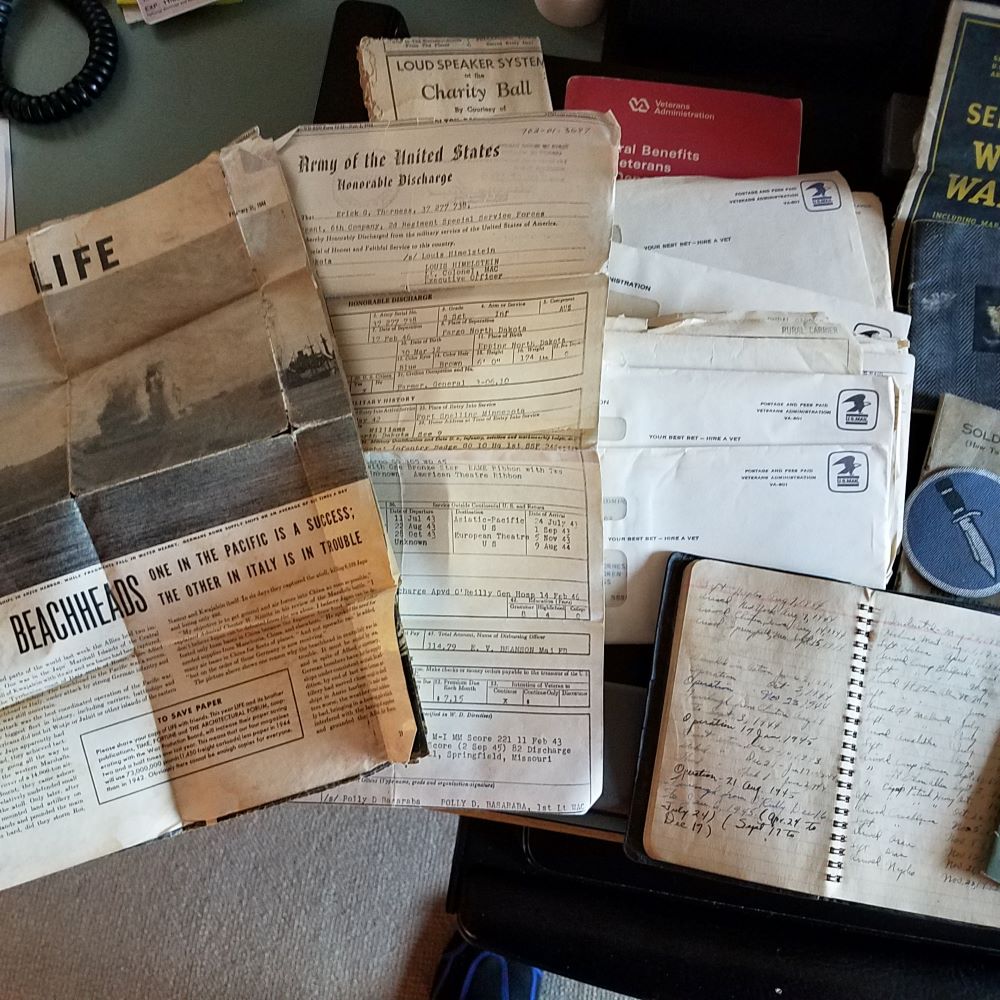
My memoir All Roads Lead to Rome recreates my father’s service in the First Special Service Force, the Army’s first commando unit, a position that took him to Italy in fall of 1943 and sent him home with debilitating injuries in June 1944. I revisited his battlefields and his history for the book in an attempt to better know who my father was and how the war changed him.
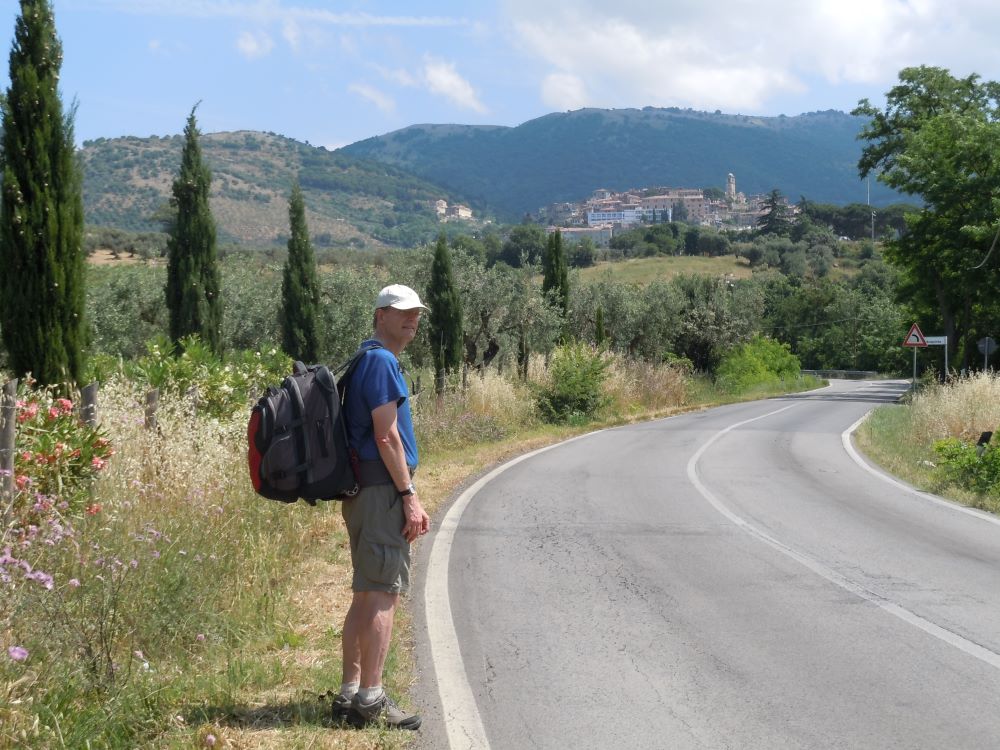
From Naples to the coastal town of Anzio, I had been exploring the path of war. After a brutal winter stalemate on the flat Anzio plains, the breakout to push the Nazis out of Rome sent my father’s unit into the hill towns along the south edge of the plain. The fight turned north at Valmontone, where sat the main railroad and highway into Rome, a few miles west of Palestrina, so he never walked in that town. But the Germans were ensconced in all the villages and high redoubts through the area, which meant the Allies would either bomb them or overtake them on the ground to flush them into retreat.
In Palestrina, it was an assault by air. Punishing Allied bombing raids left no doubt who was in charge of the skies, and long-range artillery made the attacks even more lethal. When the city’s old center was destroyed, causing the Germans to evacuate, the townspeople returned to the rubble. As they dug out and began to rebuild, they discovered archeological evidence that their city had been built on an ancient temple. Rather than build over the temple—again—evidently that had been done through the centuries, they began to study it.
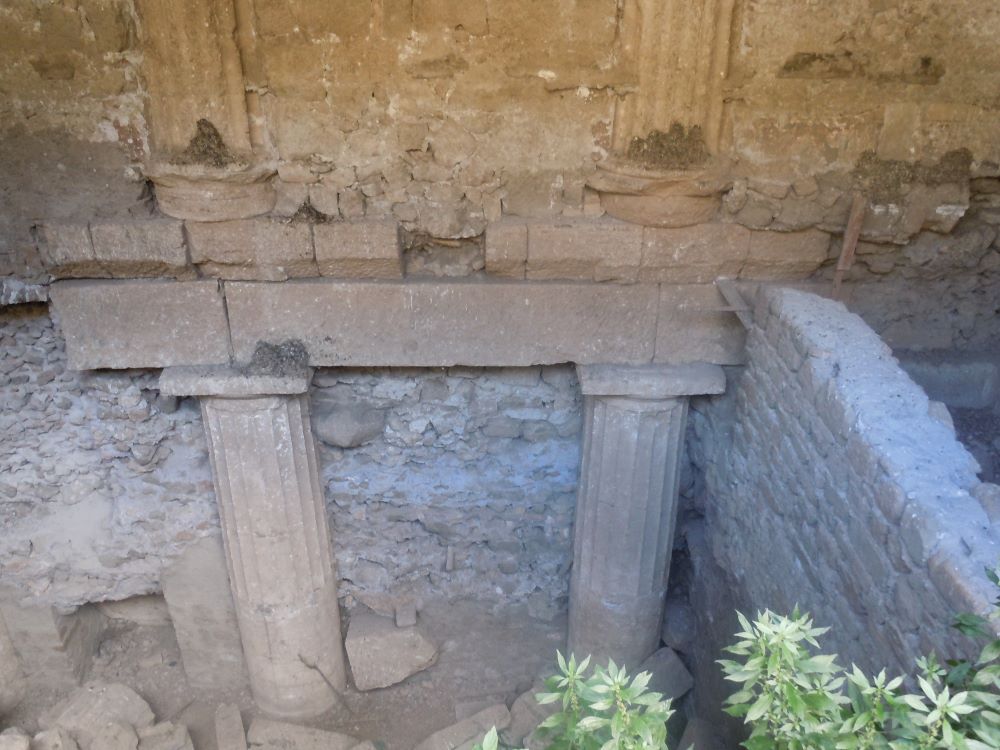
We saw a procession of ancient building techniques and materials in the ancient, excavated walls now visible on the hillside that led down to the newer part of the city. Just as a geologist can chart the earth’s eras through layers of soil, so can the Palestrinians see the history of human habitation on their land.
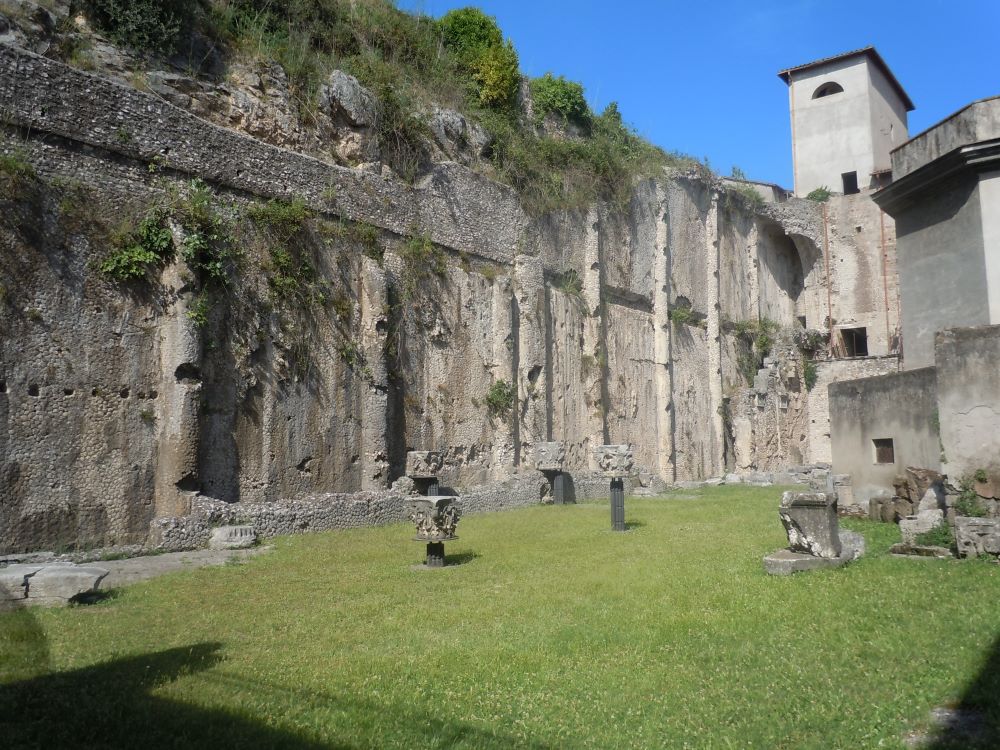
Palestrina in ancient days was known as Praeneste, and today the most direct route there from Rome is by a road called the Via Prenestina. They believe the city dated to the Etruscan era, which predated the Roman Empire by many hundreds of years. But it was in Roman days, we were told, that the Temple of Fortuna would have been created.
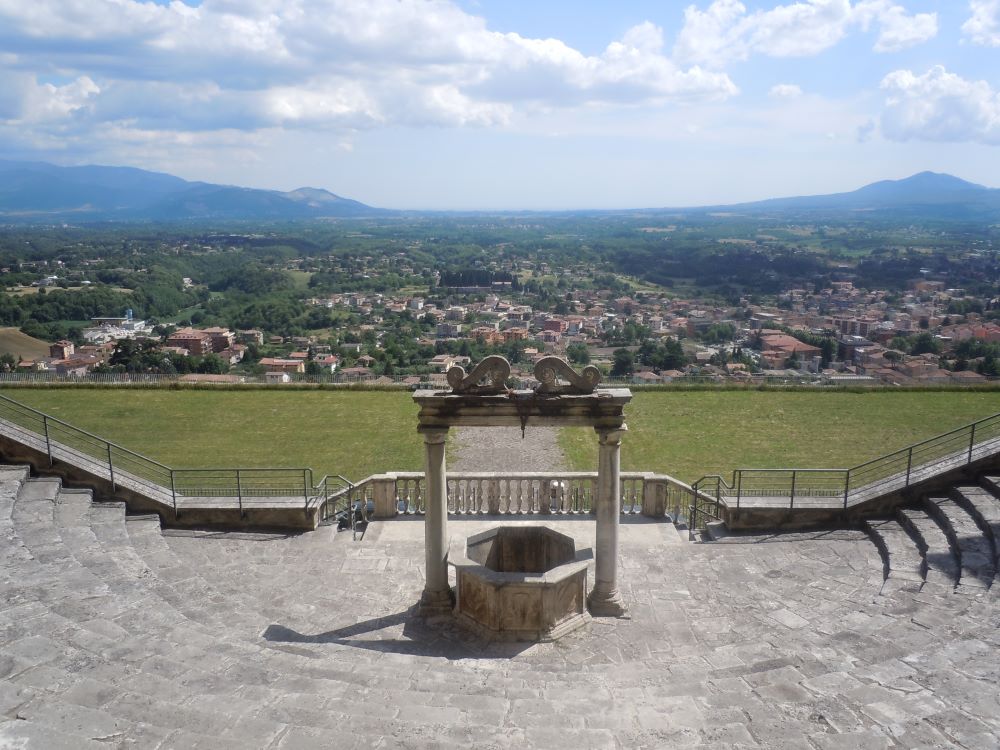
Standing on the plaza outside the Barbarini Castle, we could look west into the Anzio plains, and on a clear day probably see the coastline, some 25 miles away. The sanctuary erected there in honor of the goddess Fortuna Primigenia was atop a series of temples built into the hillside and connected by grand staircases. Vast and commanding, it would have been visible from Rome, from the coast, and from ships at sea.
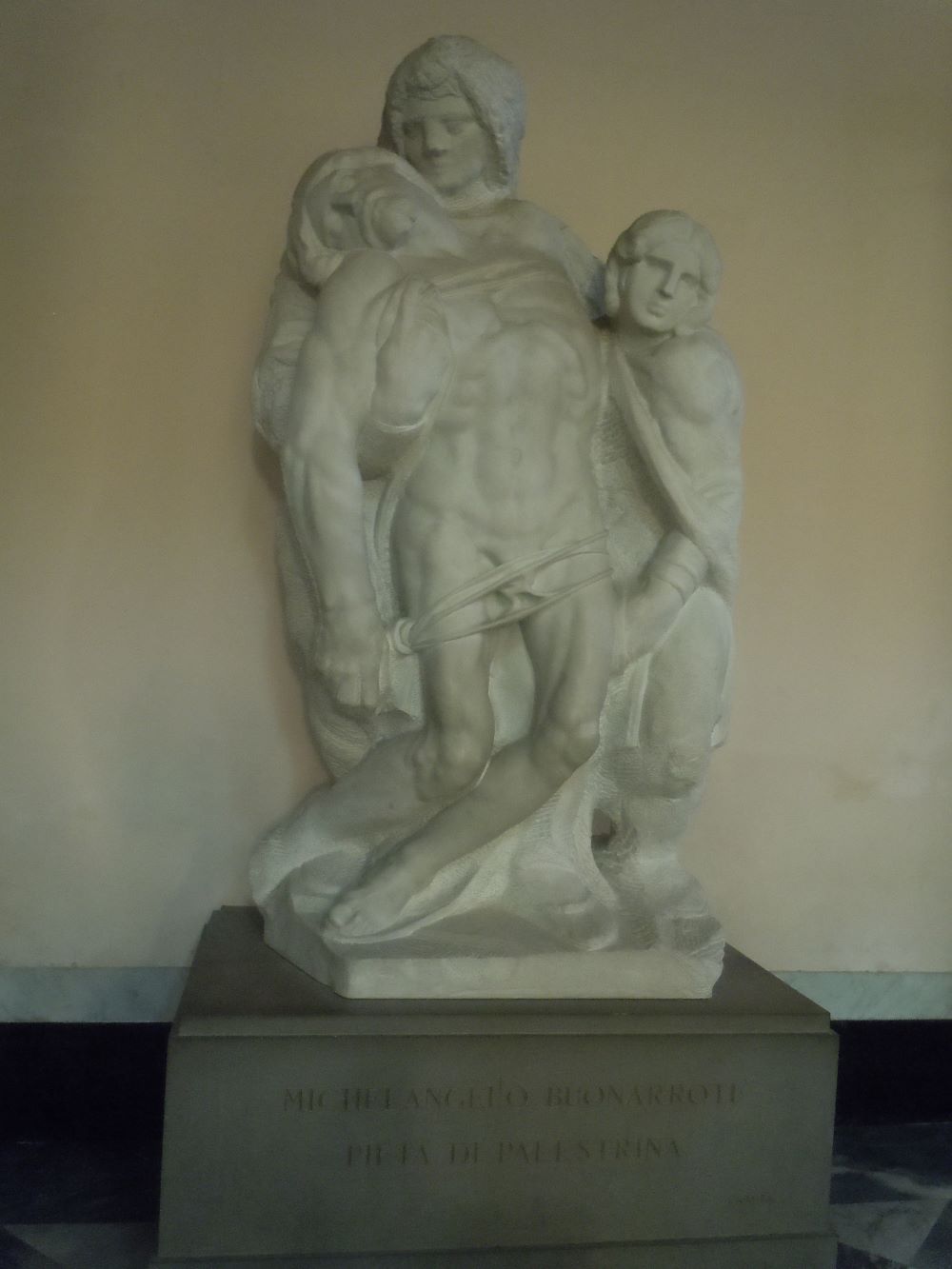
The complex and ruins were fascinating to visit, but another treasure awaited nearby. Next to the palace sits the church of Santa Rosalia, which contains the Pieta of Palestrina, a sculpture by Michaelangelo which is said to be the template for the great artist’s most famous Pieta, which can be seen at Saint Peter’s Basilica in Rome.
I viewed the uncovering of ancient Praeneste through the lens of World War II. I had visited many other such sites around the battlefields south of Rome. As with the Allied bombing of the Montecassino monastery and religious sites in many other places, the destruction of Palestrina represented a most regrettable element of war.
But when such tragic events unfold, sometimes a clarifying vision emerges.
So it was with my education of my own family’s history.
It does not take long—a few decades is enough—for us to easily forget about the forces that were exerted upon us when we were growing up. Those things that forged our personalities and sent us down our own paths are often bricked over with the mind’s desire to live for today and look forward, hopefully to a bright future.
But I found, through a deep dive into research about my family and the history of my father’s war, examining the past could lead to a new level of understanding about myself.
I could not entirely view the war through my father’s eyes, as I had hoped to do. But when I put my boots on the ground on his battlefields, I sensed the determination, the hopeful resolve, in the way he must have walked into that massive, world-changing effort.
One individual is very small, I thought, as I pictured myself standing on the plaza of the ancient temple or the battlefield of the world war. But each effort at civilization has been taken, whether stone by stone or soldier by soldier, by the actions of one person who will step up and do their part. That is a lesson that my father, even now, has taught me.

