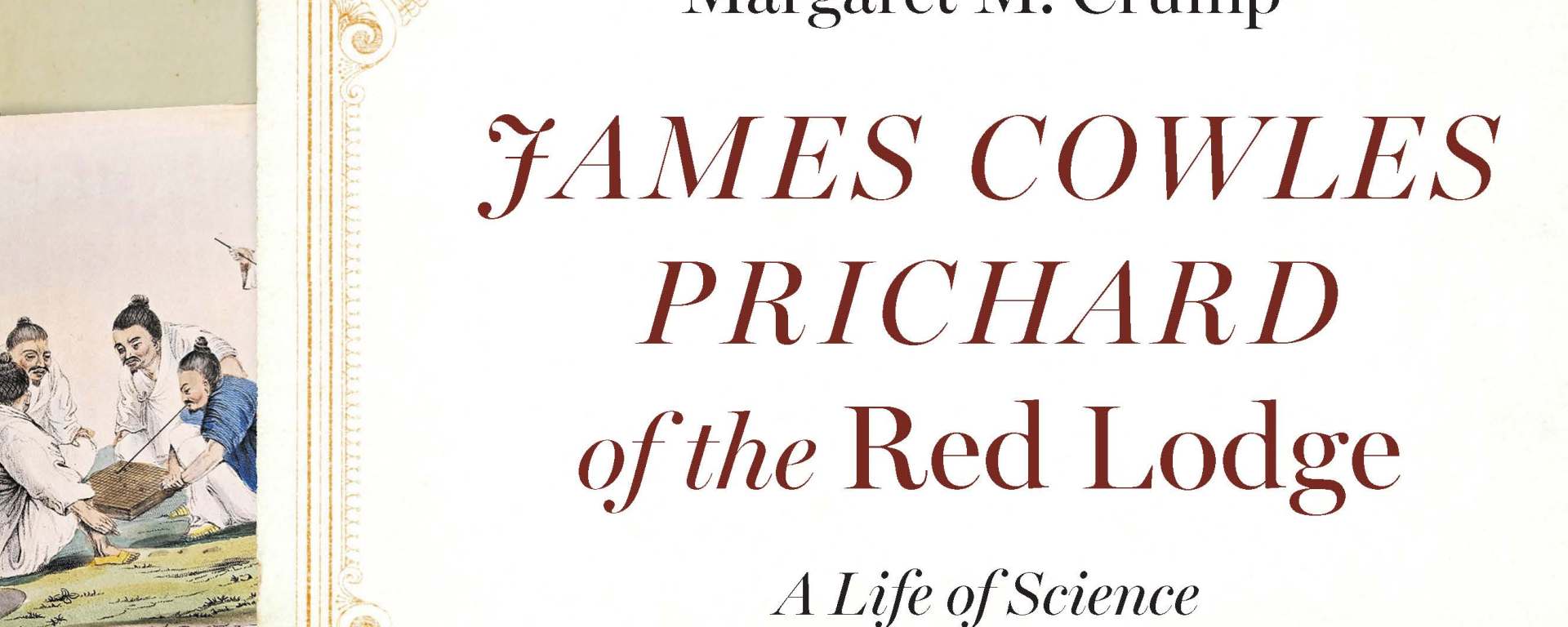
Book Birthdays celebrate one year of a book’s life in social media posts, reviews, and more. This month we’re saying Happy First Book Birthday to James Cowles Prichard of the Red Lodge: A Life of Science during the Age of Improvement (Nebraska, 2025) by Margaret M. Crump.
About the Book:
In James Cowles Prichard of the Red Lodge Margaret M. Crump offers the first in-depth biography of the early Victorian British scientist James Cowles Prichard (1786–1848). An intellectual giant in the developing human sciences, he was a pioneering psychiatric theorist in the formative years of the discipline and one of Europe’s leading anthropologists. With evocative detail, Crump draws readers into the social and cultural milieu of early nineteenth-century Bristol, a world of pre-scientific medicine and the emerging fields of anthropology and psychiatry.
A Word from the Author:
Has it really been a year since UNP published my doorstop of a book, James Cowles Prichard of the Red Lodge? This biography was a long time coming, and now on its first birthday I can recount more highs than lows, more thrills and no spills, to date.
Well before June 1, 2025, I’d received the Press’s handy nine-page “Author’s Guide to Marketing.” Who, me? Didn’t I do enough writing the darned thing? I suddenly had a new career ahead of me. First, I need to mention that my biography of a Victorian anthropologist and psychiatrist is a “cross-over title,” to use some newfound publishing lingo; it appeals to academic and general readers alike, so it doesn’t have too many long sentences containing semi-colons like this one. But not only did I have Nebraska’s long “to do list” of ways to fulfill my obligation to maximize Prichard’s customer base (more lingo), I had two customer bases to tackle. I decided to alternate my marketing efforts between intellectual historians of various stripes and general readers of social history and biography. These efforts could be made in person or online—the former transient, the latter with a longer shelf life, I hoped.
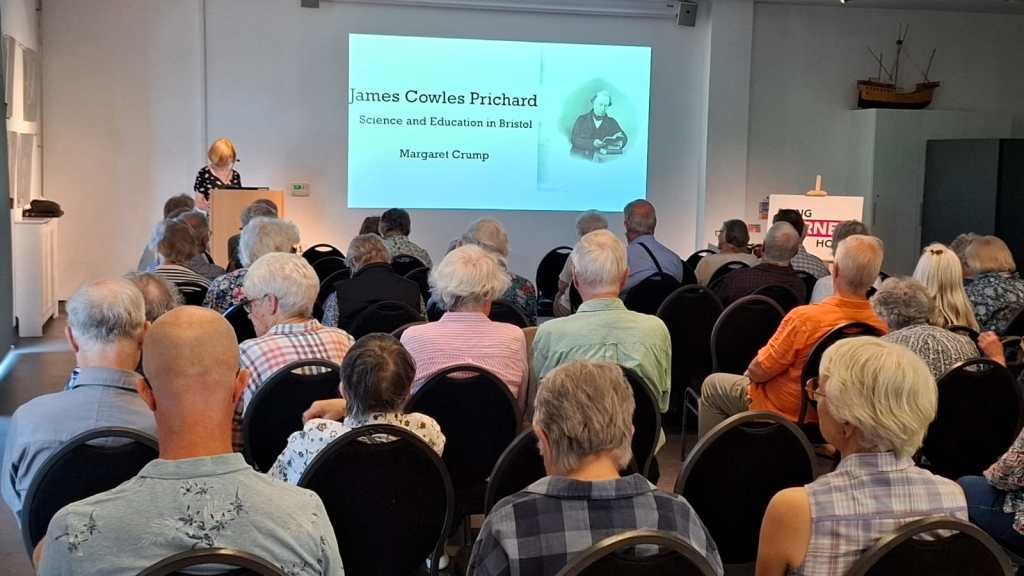
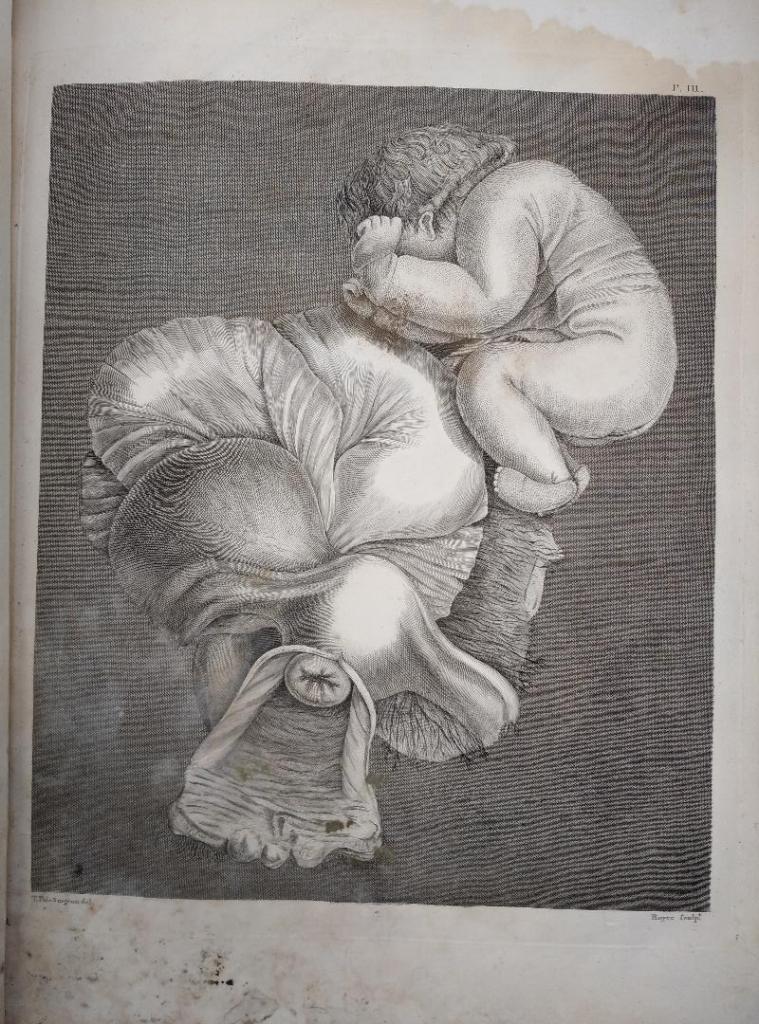
My offers to give talks paid off among association event organisers. As Prichard contains a considerable amount of Bristol, UK, regional Victorian social history, a large audience of loyal patrons of Bristol’s museums and libraries attended my lectures. Bristol’s famous sons are a bit thin on the ground, and learning about a Bristol physician who was instrumental in founding the disciplines of anthropology and psychiatry seemed to fill a niche. I didn’t get lost among my eighteen PowerPoint slides of attractive period images, to my relief. Other talks followed. In one about Prichard’s contributions to education and science I kept my audience’s attention focused with the occasional gory slide like this one from his student days.
My lecture to the Royal College of Psychiatrists’ History Special Interest Group (SIG) contained a slide illustrating an invasive treatment for insanity that kept my audience from dozing off. Less of a talk and more of an interview was my appearance on BBC Radio Bristol.
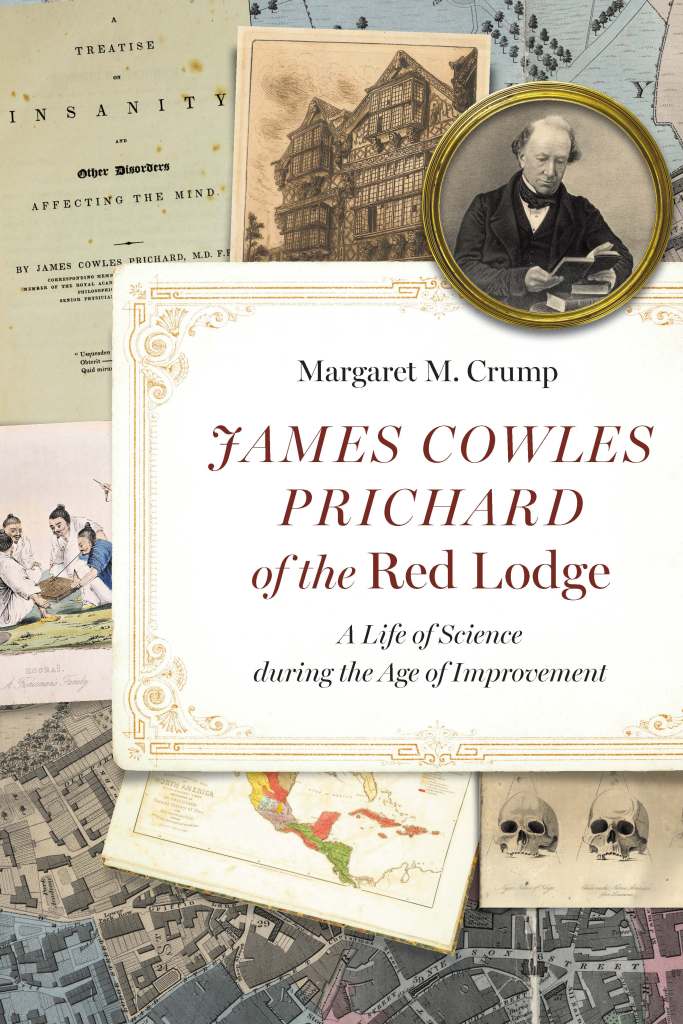
As for written initiatives, my long ‘taster’ article on Prichard’s psychiatric theories graces the pages of History of Psychiatry, naturally enough. Another one that outlines his instrumental role in the development of anthropology will appear later this month in Bérose, the online encyclopaedia of anthropology. Appealing to educators and historians is my tale of the trials and tribulations of doing biographical research which appeared in a recent issue of The Historian. I found that a regional newspaper was happy to publish a double-page spread about Prichard, complete with an image of the book’s cover.
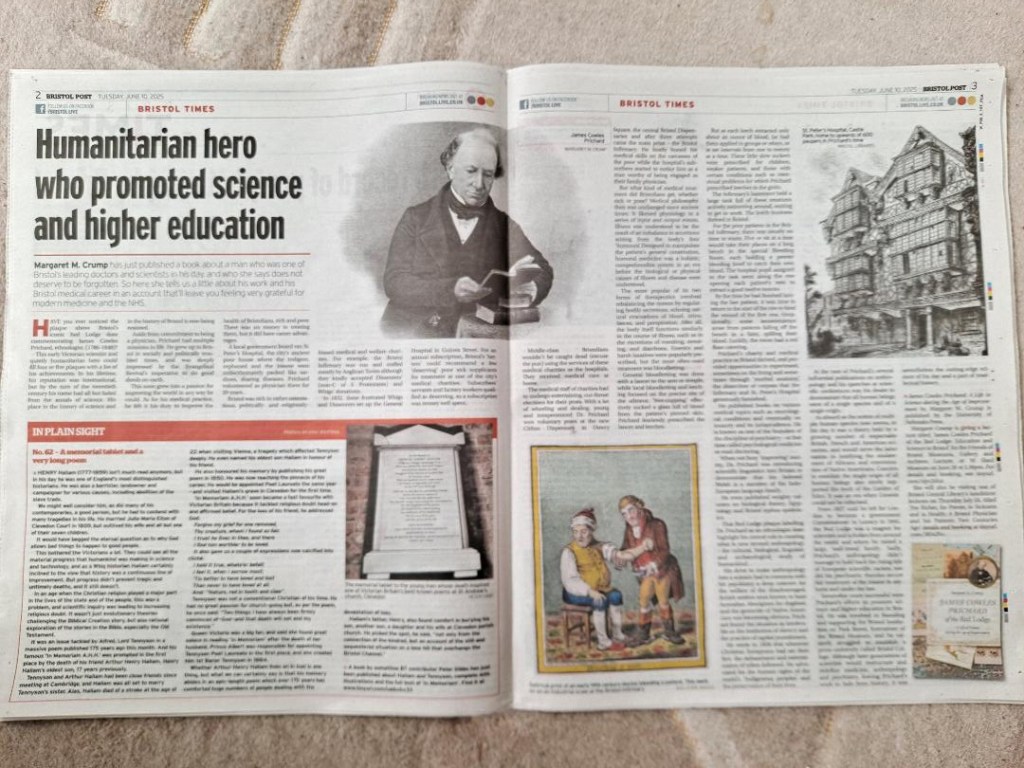
All such compositions include clear reference to Prichard. Effortful as these articles were to compose, their benefits live on in their continuing online presence. And if I keep it up, my website with its growing Prichardian “bonus content” of images, bibliography, transcriptions of correspondence, and, of course, prominently displayed book cover, will help keep James Cowles Prichard of the Red Lodge alive and selling, deo volente.
As for social media, I could use some good tips for competing with cute cat videos.
Reviews:
“Overall, Crump offers a convincing narrative that positions Prichard as a key figure in debates about human diversity, science, and morality.”—T.M. Kibbe, CHOICE
“It’s not easy to write a biography of an early nineteenth-century polymath like James Cowles Prichard . . . Outside of his scholarly contributions, much of his life was devoted to more obscure pursuits in Bristol charities and medical institutions. He left no personal archive. Margaret M. Crump has triumphed over these obstacles.”—Peter Mandler, H-Net Reviews
“Margaret Crump should be thanked for undertaking this major task of portraying for us this significant early anthropologist and his contributions to our discipline.”—Michael A. Little, Journal of Anthropological Research
“Without a clinical or academic background, Crump comes to the material with a fresh approach that can be illuminating. Any person interested in the development of the study of man or of psychiatry in the first half of the 19th Century would be wise to read this book.”—Peter Carpenter, British Society for the History of Medicine
“Prichard was not only an outstanding intellect, but a good man, a good parent of talented children and a good friend. Bristol can be proud of him; and in this book, Margaret Crump has done him proud.”—Dr. Johnathon Harlow, Avon Local History and Archaeology
In the Media:
History of Psychiatry: Madness, Science, Culture
 UNP blog